

Could the facility covering your supplier payment leave you short when it’s time to repay? For Australian businesses, Trade finance solutions Australia may include import finance, export finance, letters of credit and supply chain finance. Each can address a different stage of a trade transaction. The right option depends on when cash is needed, when payment is due and where repayment will come from, not simply on choosing the largest facility available.
Cash tied up between paying a supplier and collecting from customers can put pressure on working capital. Unfamiliar terms and security requirements can also make offers difficult to compare. This guide explains common structures, their potential benefits and risks, what lenders may assess, and how to compare costs, repayment obligations and security against your transaction and cash flow. It also includes a practical checklist to help you organise information about suppliers, customers, goods and shipment timing, and prepare questions before selecting a facility. Lender availability, eligibility and terms vary, so assess each option in the context of your business and the specific trade cycle.
Key Takeaways
- Trade finance solutions Australia can include different facilities for different transaction stages. Match the structure to the specific cash-flow gap.
- Compare trade finance with working capital finance, debtor finance and business lending by checking each option’s purpose and expected repayment source.
- Review total costs, repayment timing, security, guarantees and conditions in the lender’s documents before committing.
- Prepare clear information about your business, transaction, cash flow and repayment capacity, then confirm the lender’s specific requirements.
- Use a step-by-step decision framework to test timing and repayment risks before progressing with a finance application.
Trade finance solutions in Australia: what they fund and when they may fit
Trade finance is funding connected with a trade-related business transaction, such as buying goods from a supplier or fulfilling an export order. Trade finance solutions Australia may help address a timing gap between paying for goods and receiving payment from a customer. Suitability depends on the transaction, the business’s financial position, lender criteria and a realistic repayment source. A facility can support cash flow, but it also creates repayment obligations that need to fit the business’s forecast.
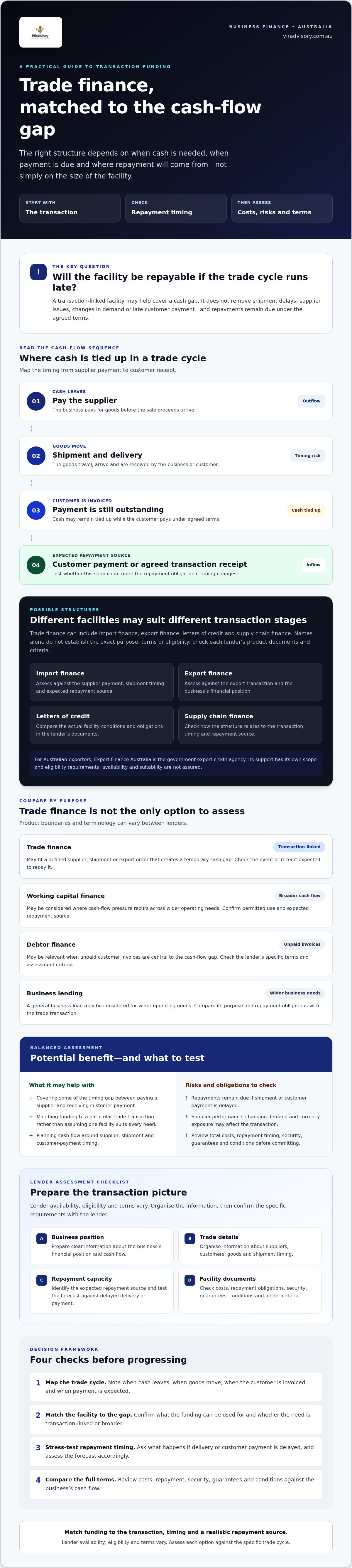
Start by mapping the trade cycle: when cash leaves the business, when goods move, when the customer is invoiced and when payment is expected. This timeline can help you decide whether transaction-linked funding is worth assessing or whether broader working capital finance may better suit the need. For additional background, see this overview of trade finance.
For an overview of how trade finance may relate to business cash flow, watch:
Which business cash-flow gaps might trade finance address?
Hypothetical example: An Australian wholesaler pays a supplier for goods before they are shipped. The goods travel to Australia, are received and sold to a customer, who pays later under agreed terms. Until that customer payment arrives, cash is tied up in the purchase. Meanwhile, the business still needs to manage payroll, supplier invoices and operating expenses.
A transaction-linked facility may help cover some of that gap, subject to lender assessment and the facility terms. It won’t remove the risks of shipment delays, supplier performance issues, changes in demand or late customer payment. Repayments remain due, so test the forecast against a delayed delivery or receipt rather than relying only on expected dates.
How does trade finance differ from other business finance?
Trade finance is generally assessed in connection with a particular trade transaction, its timing and its anticipated repayment source. Working capital finance or a general business loan may be considered for wider operating needs. Debtor finance may be relevant when unpaid customer invoices are central to the cash-flow gap. Product boundaries and terminology can vary between lenders.
Before comparing options, check what the funding can be used for, what event or cash receipt is expected to repay it, and whether the facility is linked to a supplier, shipment or customer payment. Review the lender’s current product documents and criteria. Don’t assume that facilities with similar names have the same terms or requirements.
Match a trade finance facility to the transaction and repayment source
The appropriate finance structure depends on what needs funding, when cash is expected back and whether that repayment source is reliable. Trade finance solutions Australia may cover transaction-linked needs, but a product label alone doesn’t establish suitability or lender approval. Compare the actual terms and assessment criteria against the supplier’s obligations, delivery schedule and customer payment terms.
For Australian exporters, Export Finance Australia is the government export credit agency. Its support is subject to its own scope and eligibility requirements. This does not mean a particular facility will be available or suitable for every business.
| Finance category | Purpose | Potential fit | Likely repayment source | Questions to ask and key risks |
|---|---|---|---|---|
| Trade finance | Funding linked to a trade transaction | A defined supplier, shipment or export order creates a temporary cash gap | Sale proceeds or another agreed transaction receipt | What triggers repayment? What if delivery or customer payment is delayed? Check currency exposure and supplier performance risks. |
| Working capital finance | Broader business cash-flow needs | Pressure recurs across operating costs, rather than arising from one transaction alone | Business cash flow, as set out in the facility terms | Can cash flow support repayments alongside payroll, suppliers and overheads? Check whether the structure suits ongoing or short-term needs. |
| Debtor finance | Funding associated with unpaid customer invoices | Eligible receivables may help address a delay between invoicing and collection | Customer invoice payments, subject to the arrangement | Which invoices and customers qualify? Check costs, recourse or other obligations, and what happens if a customer pays late or disputes an invoice. |
| Business lending | Funding for a broader business purpose | The need isn’t confined to one trade transaction | Business cash flow or another agreed repayment source | Does the purpose fit the lender’s criteria? Review repayment commitments, security and any guarantees required. |
Match the structure to the cash-flow pattern
A defined transaction with an identifiable receipt may warrant assessing transaction-linked funding. If the pressure spans several operating expenses or occurs repeatedly, compare broader working capital or business lending as well. Debtor finance may be relevant when unpaid invoices are central to the gap, but lender eligibility, arrangements and risks vary.
Map supplier payment dates against expected delivery, invoicing and customer receipts. Then ask what cash would repay the facility if an expected receipt is delayed, reduced or not received. Compare the lender’s specific eligibility criteria, costs, security and repayment obligations against that timeline before deciding which options to explore.
Compare trade finance terms, benefits and risks before committing
Trade finance can help align funding with a trade transaction, but it also creates repayment obligations and may expose business assets or guarantors, depending on the facility. Compare written proposals against the same transaction, expected drawdown period and repayment assumptions. Headline pricing alone won’t show the full cost or whether repayments fit the business’s cash flow.
Approval and facility terms depend on the individual lender’s assessment of the business and transaction. Requirements and costs can vary between lenders and applications. For current information about eligibility and available support for exporters, refer to the Australian Government’s overview of Export Finance Australia loans.
Which questions reveal whether the facility fits?
Read the lender’s proposal and facility documents, then clarify any terms you can’t readily explain. Establish what triggers funding, when repayments fall due and whether repayment is expected from customer receipts, general business cash flow or another source. Check how the timing works if delivery or customer payment is delayed.
- Total cost: What interest, fees or other charges apply, when are they payable, and how might the cost change if the facility remains in use longer than planned?
- Repayment: What amount is due, on what dates, and what happens if expected sale proceeds arrive late?
- Security and guarantees: What security is required, who may need to provide a guarantee, and what obligations follow?
- Conditions: What transaction documents, reporting or other conditions must be met before funds are available and while the facility is active?
Compare proposals using consistent assumptions about funding dates, repayment dates and expected customer receipts. If offers use different assumptions, ask the lenders to clarify the comparison before deciding.
What risks and common mistakes should businesses avoid?
A facility may provide cash-flow flexibility by helping meet a supplier obligation before customer funds arrive. That flexibility has a cost: repayments remain due, and security or guarantees may increase the consequences if the business can’t meet them. Funding also doesn’t remove shipment, supplier performance, currency or customer payment risks.
Don’t select an offer on headline pricing or speed alone. Check the full obligations, and don’t assume the facility covers every trade expense or will be available for future transactions. A cash-flow forecast that relies on unconfirmed delivery dates or customer payments can understate the risk of a repayment shortfall.
Before committing, confirm:
- The amount and timing of the funding match the transaction obligations.
- The repayment source and due dates are clear, including a plan for delays.
- All applicable costs, security, guarantees and conditions are understood.
- The business can meet repayments without relying on uncertain receipts.
Prepare for Australian lender assessment with a trade finance checklist
A lender needs to understand both the business’s ability to meet repayments and how the proposed facility relates to the transaction. Assessment may cover financial position, cash flow, existing commitments, repayment capacity, transaction evidence and available security. Criteria and document requirements vary between lenders and facilities, so confirm the current requirements before applying.
Prepare a forecast that includes the proposed repayments and explains its assumptions. Distinguish confirmed delivery dates and customer payment terms from estimates. This makes it easier to identify where a delay could affect the cash available for repayments and operating costs.
Trade finance application checklist
- 1. Define the request. Record the funding purpose, amount required and key transaction dates. Explain how the funds will be used.
- 2. Organise business records. Gather current financial statements, management accounts if available, details of existing liabilities and a cash-flow forecast that includes the proposed repayments.
- 3. Collect transaction documents. Organise relevant supplier and customer details, purchase orders or contracts, invoices, and available delivery or shipment information. Ask which documents the lender requires for this transaction.
- 4. Set out repayment capacity. Identify the expected repayment source and timing. Reconcile projected receipts and repayments with existing finance commitments and operating expenses.
- 5. Clarify security and conditions. Ask whether security or guarantees may be required, which documents support them, and what conditions apply before funds are drawn or while the facility is active.
- 6. Confirm process requirements. Request the lender’s current eligibility criteria and document checklist, and ask about its assessment process. Timing varies, so don’t assume approval will arrive by a supplier’s deadline.
Infographic brief: Lender preparation at a glance
Business position (financial statements, liabilities) → Trade transaction (supplier, order, delivery records) → Cash-flow assessment (forecast, commitments, assumptions) → Repayment source (expected receipts and timing) → Facility conditions (security, guarantees, lender-specific documents).
Use a simple flow diagram with these five stages. Add a note: “Requirements vary by lender and facility. Confirm the current checklist before applying.”
Reduce avoidable delays
Incomplete records, inconsistent forecast figures or an unclear use of funds can prompt further lender questions. Disclose relevant liabilities, explain how forecast assumptions were reached, and identify any customer receipts or delivery dates that aren’t confirmed. A clear repayment plan should account for those uncertainties instead of relying on best-case timing.
Before submitting, check that the business information, transaction documents and cash-flow forecast are consistent. Ask the prospective lender or broker to confirm the specific document list and assessment requirements. Don’t assume approval or a particular assessment timeframe.
Choose a trade finance pathway and take the next step
Choose a finance option by testing it against the transaction, not just its product name. Define the trade activity, map when supplier payments and customer receipts fall due, identify the expected repayment source, compare lender terms, then test what happens if delivery or payment is delayed. This helps show whether the request matches a defined transaction or whether the business needs a broader assessment of working capital or business finance.
What should a business clarify before speaking with a broker?
Prepare a concise outline of what the business is buying or supplying, why funding is needed, when it’s required and how the facility is expected to be repaid. Bring relevant supplier, customer, order, invoice and delivery information, along with a cash-flow forecast and details of existing finance commitments.
Be ready to explain current cash-flow pressures and any security that may be relevant. Note uncertainties too, such as an unconfirmed delivery date or a customer payment that could be delayed. This gives a broker or lender a clearer basis for discussing possible options, but the lender must confirm its own eligibility criteria, document requirements and terms.
How can VIR Advisory support a finance assessment?
VIR Advisory is a finance brokerage, not a direct lender. It connects clients with lenders and can assess business loans and commercial finance options, with availability, eligibility and terms depending on the business and transaction. A broker discussion may help if the business is weighing transaction-linked funding against working capital or other business finance, or wants to understand what information lenders may require. It can’t guarantee approval or access to a particular trade finance facility.
Raina Doshi has over 15 years of banking and finance experience, including more than a decade with one of Australia’s leading banks. That background informs the assessment of the funding purpose, cash-flow position and repayment plan before lender options are considered.
Before progressing, confirm that the proposed repayments remain manageable if the transaction takes longer than expected. Ask the lender to explain any conditions or obligations that aren’t clear. A well-defined request supports a more focused discussion, while the final decision and facility terms remain with the lender.
Make your next finance decision with clarity
Trade finance solutions Australia should be assessed against the transaction’s timing, funding purpose and realistic repayment source. A facility linked to a supplier payment may not suit recurring operating costs, so compare it with working capital finance, debtor finance and business lending where relevant.
Before proceeding, review the full lender terms, including costs, repayment dates, security, guarantees and conditions. Organise business and transaction records, disclose existing commitments, and test whether repayments remain manageable if delivery or customer payment is delayed. Lender availability, eligibility and terms depend on the business, transaction and individual lender assessment.
VIR Advisory is a finance brokerage connecting Australian businesses with lenders, not a direct lender. Raina Doshi has over 15 years of banking and finance experience, including more than a decade with one of Australia’s leading banks. A discussion can help clarify which finance options may warrant assessment, without guaranteeing approval or access to a particular facility.
With the transaction, cash-flow timing and repayment plan clearly set out, you can approach the next funding discussion with greater confidence.
Frequently Asked Questions
What are trade finance solutions in Australia?
Trade finance solutions Australia refers to funding connected with a business trade transaction, such as paying a supplier for goods or fulfilling an export order. A facility may help address a timing gap before related customer receipts arrive. It doesn’t guarantee that a customer will pay or that the trade will succeed. Products, availability and lender criteria vary, so check the written terms, repayment dates, costs and obligations before proceeding.
Which type of trade finance is best for a small business?
There isn’t one facility that’s best for every small business. The suitable structure depends on the transaction, the cash-flow gap, the expected repayment source, the business’s financial position and lender criteria. Compare transaction-linked trade finance with working capital or debtor finance if those options match the need. Ask the lender or a finance broker to clarify how each facility works, including eligibility, costs, security and repayment obligations.
Can an Australian business get trade finance without property security?
Possibly, but property security can’t be assumed either way. Requirements depend on the lender, facility and application, and a lender may consider other forms of security or guarantees under its own policies. Before accepting an offer, ask what assets or parties may be covered, what documentation is required, and what obligations apply if the business can’t repay. Review the security and default terms in the facility documents, not only a verbal explanation.
How do lenders assess a trade finance application?
Lenders may assess the business’s financial position, transaction details, cash flow, repayment capacity, existing commitments and available security. They may also need to understand how the funding relates to the trade activity and where repayment is expected to come from. Criteria and required documents differ by lender and facility. Request the lender’s current checklist, explain the funding purpose clearly, and provide a realistic repayment plan that accounts for possible delays.
Is trade finance suitable for managing ongoing cash-flow pressure?
A facility linked to a specific transaction may not suit recurring or general operating cash-flow pressure. Depending on the business’s circumstances and lender criteria, it may be useful to compare working capital finance or debtor finance as well. Whichever structure is considered, check that repayments align with reliable cash receipts and won’t create pressure alongside existing commitments. Additional finance creates debt obligations, so test the effect on ongoing cash flow.
What documents may a business need for trade finance?
Document requirements vary by lender and facility. A business may be asked for financial information, cash-flow forecasts, details of existing commitments, and records relating to the transaction, such as supplier or customer documents, orders, invoices or delivery information. Confirm the specific checklist with the prospective lender or broker before applying. Complete, consistent records help explain the funding purpose, transaction timing and expected repayment source, and may reduce avoidable follow-up requests.
What risks should a business check before accepting trade finance?
Check the full costs, repayment dates, security or guarantees, facility conditions and timing of any funding. Consider what happens if delivery is delayed or a customer pays late, because repayments may still be due. Trade finance can increase the business’s debt exposure and doesn’t remove trading or customer-payment risk. Read the lender documents carefully, compare the obligations against cash-flow forecasts, and ask for clarification on any term you don’t understand before committing.

Article by
Raina Doshi
Raina Doshi has worked in banking and finance since 2011, including experience with major Australian lenders. She helps homeowners, property investors, business owners and professionals secure and structure lending solutions across home loans, refinancing, commercial finance and business lending.
Areas of expertise include residential lending, investment property finance, debt recycling, commercial property finance, equipment finance, construction finance and strategic debt structuring.
Drawing on extensive banking and finance experience, Raina helps clients navigate lender requirements, improve borrowing outcomes and structure effective finance solutions.
Disclaimer
The information in this article is general in nature and does not take into account your personal objectives, financial situation or needs. Before acting on any information, consider whether it is appropriate to your circumstances and seek professional advice.


