

The property with the highest rental yield may not be the strongest investment for your finances. Effective property investment finance strategies in Australia balance potential capital growth and rental income with borrowing capacity, available equity and your ability to manage repayments and holding costs.
It’s understandable to focus on a property’s rental income or growth prospects, but neither tells the full story. A higher-yield property may support cash flow, while a growth-focused investment may depend more on your capacity to cover costs over time. Your loan structure and existing debts also affect how much room you have to invest again.
This article explains how to weigh growth against yield, use equity without overlooking debt serviceability, and assess buy-and-hold investing. It also covers lending factors that can shape your options, helping you see how a property strategy fits your cash flow and longer-term plans.
Key Takeaways
- Assess rental yield alongside potential capital growth, ongoing costs and vacancy risk to understand how an investment may affect cash flow.
- Compare the property’s income and expenses before relying on negative gearing or expected tax benefits to make a deal affordable.
- Use equity cautiously: lenders assess available borrowing capacity and repayments, while loan structure can affect future refinancing options.
- For a buy-and-hold strategy, consider whether the property’s location, rental demand and holding costs fit your investment timeframe.
- Stress-test repayments against rate rises, vacancies and repair bills before committing, then review how the investment debt fits your wider finances.
Is capital growth or rental yield better?
Across NSW, Victoria, Queensland, Western Australia, South Australia, Tasmania, the ACT and Northern Territory, stamp duty and land tax vary by jurisdiction. The amounts depend on purchase price, land value, ownership and applicable concessions. Vacancies reduce rental income, rate rises increase repayments, repairs lift holding costs, and regulatory or tax changes can alter cash flow.
Rental Yield and Positive Cash Flow
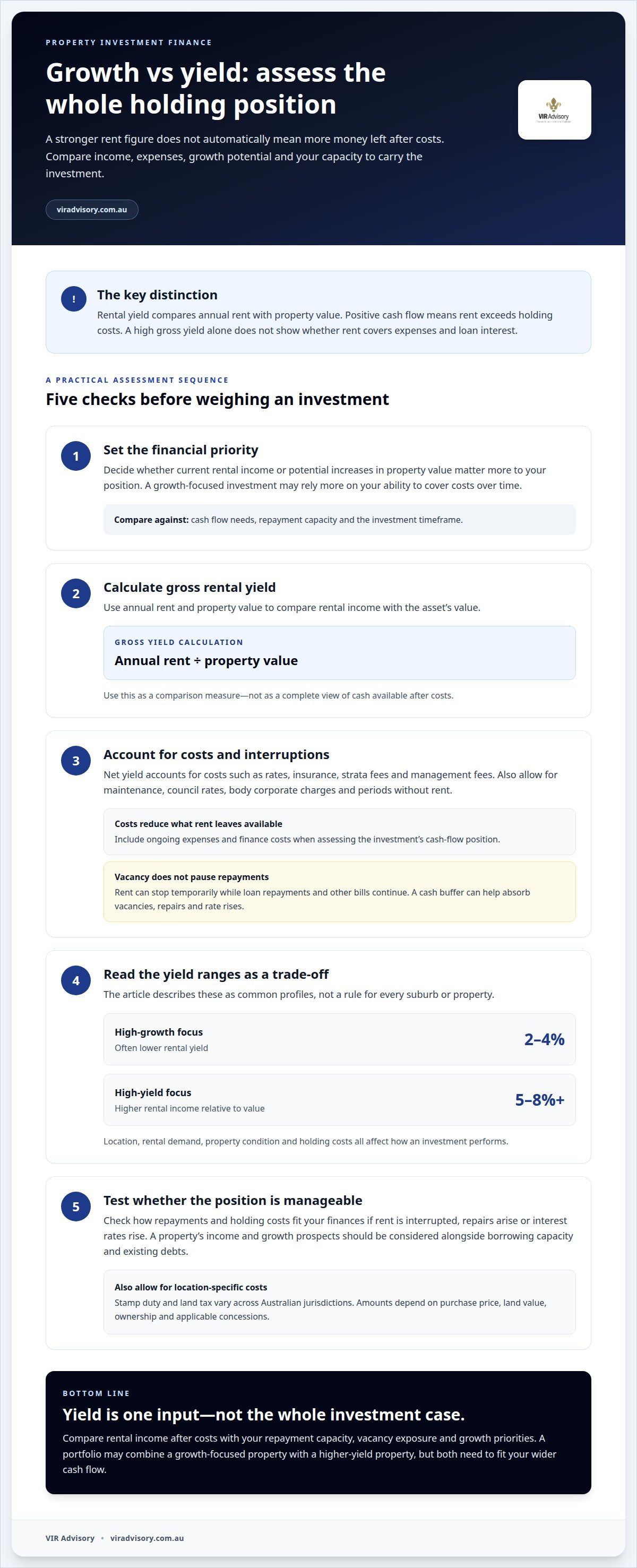
Rental yield compares a property’s annual rent with its value, while positive cash flow means rent exceeds its holding costs. The distinction matters because a strong gross yield doesn’t automatically leave money available after expenses and loan interest.
Use gross yield to compare rental income with property value, then account for expenses and finance costs. Positive cash flow can help cover repayments and other costs, but your calculation should also allow for vacancies and unexpected repairs.
Rental Income, Property Value and Ongoing Costs
Rental income is money received from tenants, property value is the asset’s market worth, and ongoing costs are the expenses of holding it. Together, these figures show whether rent supports the investment or leaves a cash-flow shortfall.
Gross rental yield is calculated by dividing annual rent by property value. Net rental yield also accounts for costs such as rates, insurance, strata fees and management fees. If rent stays unchanged, a rise in property value can lower the calculated yield, even as the owner’s capital position changes.
Include maintenance, council rates, insurance, body corporate charges and periods without rent in your calculations. A vacancy, for example, can interrupt income while loan repayments and other bills continue. A cash buffer can help absorb vacancies, repairs and interest rate rises without relying on rent arriving every week.
Balancing Rental Income and Capital Growth
Balancing rental income and capital growth means weighing current cash flow against potential increases in property value. It matters because a property that supports repayments today may offer a different growth profile from one bought primarily for future value gains.
High-growth investment properties often have rental yields of 2-4%, while high-yield properties can produce 5-8% or more. These ranges illustrate the trade-off, not a rule for every suburb or property. Location, rental demand, property condition and holding costs all affect how the investment performs.
An investor could combine a growth-focused property with a higher-yield property, balancing capital growth and rental income across the portfolio. One investor might prioritise rent to manage current cash flow; another may accept a tighter position while targeting growth. Compare both approaches against repayments, vacancies and repair costs before deciding.
What is the best property investment strategy in Australia?
There’s no single best approach: capital growth, rental yield, renovations and pooled property investments suit different cash-flow needs and risk tolerances. Compare expected income, holding costs, investment timeframe and tax treatment before buying, rather than choosing based on yield or tax deductions alone.
Negative Gearing and Tax Treatment
Negative gearing occurs when an investment property’s income is lower than its holding expenses, resulting in a net rental loss. That loss affects cash flow, so a tax deduction shouldn’t be treated as profit or as a substitute for funds needed to meet repayments.
When annual costs exceed rental income, the investor must fund the shortfall. Tax treatment may affect the after-tax position, but it doesn’t remove the need to pay expenses when they fall due. Compare this with a positively geared property, where rent exceeds holding costs, and assess whether the income supports your ongoing commitments.
From 1 July 2027, full deductibility of rental losses will generally be limited to eligible new residential dwellings. The ATO confirms the change is now law, making the property type and purchase timing relevant when assessing tax treatment alongside finance costs.
Strategy Comparisons and Tax Changes
A capital-growth strategy focuses on potential increases in property value, while a rental-yield strategy prioritises income relative to the purchase price. Renovations may add value, but assess project costs, approvals, timeframes, holding expenses and the risk of overcapitalising.
A property syndicate pools investors’ money and is managed by an investment manager. It offers exposure to property without direct ownership of an individual asset, but investors should understand the fees, risks and withdrawal rules before investing. It also provides less direct control over property decisions than owning a property yourself.
Grandfathering affects how some existing investments are treated. Existing residential investment properties held at 7:30pm (AEST) on 12 May 2026 remain subject to the previous negative gearing rules. The 2026 Federal Budget announced changes to the application of negative gearing and capital gains tax, so consider the relevant rules when comparing a proposed purchase with other investment approaches.
Compare the options by assessing their effect on available cash, your intended holding period and the property’s costs. A renovation may suit an investor able to manage project requirements, while a rental-income focus may better match a need for current cash flow. The right strategy depends on how these factors fit together.
Building a property portfolio using equity
Equity can help fund an investment deposit, but accessing it increases debt and repayments. Portfolio plans should account for usable equity, lender assessments and how each loan is secured.
Using Home Equity for a Deposit
Home equity is the difference between a property’s value and the debt secured against it. Australian lenders may allow access to up to 80% of a property’s value as equity, though this varies between institutions.
For example, a home worth A$800,000 with A$500,000 in home-loan debt has A$300,000 in equity. That doesn’t mean all A$300,000 is available to borrow: the lender’s assessment and the existing debt affect accessible funds. Using an equity release for a deposit also increases the loan balance, so repayments and interest need to fit your cash flow.
Equity and Loan Structures
Loan structure determines how investment borrowing is organised and which properties secure the debt. In a separate example, Sahim’s property is valued at A$500,000 with a A$350,000 home loan; the example gives him A$50,000 in available equity.
Accessing that A$50,000 raises Sahim’s home loan to A$400,000, with repayments adjusted accordingly. Standalone loans keep each investment property separate, while cross-collateralised loans secure borrowing against two or more properties. The structure matters because cross-collateralisation can make it harder to refinance or access equity in one property independently.
Equity can fund an investment purchase, but lenders also assess whether your income and existing commitments support the increased debt. A property valuation alone doesn’t establish borrowing capacity. For example, a borrower with substantial equity may still face limits if the proposed repayments don’t meet the lender’s serviceability assessment.
Keeping loans separate can make each property’s debt and security easier to track. You can avoid cross-collateralisation while borrowing from a single lender; using multiple lenders isn’t required. Each loan still has its own assessment and terms, so the overall structure should support both the first purchase and possible future borrowing.
Loan purpose matters for tax treatment. The purpose of borrowing, rather than the property used as security, determines whether debt is tax deductible. If a loan secured against a home funds an investment purchase, clear loan splits can help distinguish that borrowing from private spending. Mixing purposes may make the debt harder to track.
Equity might also fund renovation work, but the added borrowing comes alongside project costs and holding expenses. Before releasing funds, lenders assess the application, security and borrower’s ability to repay. For portfolio growth, the key question isn’t simply how much equity exists, but how new debt affects cash flow and future borrowing capacity.
Buy-and-hold investing
Buy-and-hold investing means purchasing a property and retaining it over an extended period, rather than relying on a quick resale. A typical Australian holding period is 7-15 or more years. During that time, rental income may help meet ongoing costs while capital growth can contribute to the asset’s value. The approach depends on whether the property and its finance remain manageable throughout the holding period.
A longer timeframe can give investors more time to respond to changing rental conditions, maintenance needs and interest costs. It doesn’t remove the need for sufficient cash flow. An investor relying on rent to cover repayments, for example, still needs to manage a vacancy or repair bill when income pauses. The property’s location, tenant demand and ongoing expenses affect the pressure these events place on household finances.
Location matters because growth varies between Australian markets. Desirable locations, good infrastructure and amenities, a strong local economy, high demand relative to supply, and planned infrastructure projects can support capital growth. These factors don’t guarantee a particular result, so compare the property’s prospects with its purchase price, expected rental income and holding costs. A suburb’s reputation alone won’t show whether the investment suits your situation.
For investors building a portfolio, the accumulation phase may last 10-15 years, while a broader portfolio strategy may span 10-20 or more years. Those timeframes make finance capacity important: repayments on one property can affect the ability to fund another. A purchase that uses most available cash may limit flexibility for repairs, vacancies or future borrowing. Consider how each acquisition fits the overall portfolio, not only its own rental income.
A renovated property may remain in an investor’s portfolio for 20+ years, but renovation does not automatically justify holding it. The decision still depends on project costs, the property’s condition, rental demand and how the work supports long-term use. A property needing substantial work can also create periods with reduced rental income, so include that possibility when assessing the holding plan.
- Timeframe: Does the expected holding period fit your plans and capacity to keep the loan?
- Location: Are infrastructure, amenities, local economic strength and demand relevant to this property?
- Cash flow: Can rental income and available funds support repayments, maintenance and vacancies?
- Portfolio fit: Will this purchase leave room for existing commitments and possible future investment?
These checks connect property selection with finance over the full holding period. A buy-and-hold strategy works only if the asset and its debt remain manageable as circumstances change, not simply because the intended timeframe is long.
Investment property finance and debt serviceability
Debt serviceability is your capacity to meet loan repayments after a lender assesses your income, expenses and existing debts. It matters because rental demand or the size of your deposit alone doesn’t determine whether borrowing fits your finances. Property investment finance strategies in Australia need to account for whether repayments remain manageable alongside other commitments and property costs.
A finance broker typically reviews your goals, income, expenses, debts, assets and deposit, then assesses borrowing capacity against lender criteria. They consider the proposed property and loan structure, identify funding options, prepare the application and coordinate with the lender. Provide accurate income and employment details, loan statements, living expenses, evidence of your deposit, and the property’s purchase and rental information.
Lenders assess the whole application, not just the property. Existing home loans, personal debts and regular expenses affect the funds available for investment repayments. Rental income can contribute to the assessment, while vacancy periods and holding costs affect your cash-flow position. A buyer contributing a 25% deposit, stated as A$50,000, toward a regional apartment still needs to show that the proposed debt works alongside existing commitments.
Test a proposed purchase against higher interest rates, short vacancies and repair bills before committing. If rent stops temporarily, loan repayments and property expenses still fall due. A cash buffer can cover interruptions, while a lower deposit or additional borrowing can increase repayment pressure. The Reserve Bank of Australia kept the cash rate at 4.35% through late 2024, illustrating that borrowing costs can change over time.
Portfolio serviceability also affects what you can do next. Active property investors should review their finance portfolio at least every 12 months. A review can bring outstanding debts, rental income, interest costs and loan structures into one assessment. Changes in income or expenses can affect borrowing capacity, so a previous approval assessment shouldn’t be treated as a permanent spending limit. Effective property investment finance strategies in Australia account for those changes before a new commitment.
For each proposed investment, the broker’s assessment should connect these factors:
- Income and commitments: employment or business income, living costs, existing loans and other debts.
- Property figures: purchase details, expected rent, ongoing costs and vacancy exposure.
- Funding position: deposit source, available funds, proposed loan structure and repayment capacity.
- Risk test: the effect of rate rises, repairs and rental interruptions on cash flow.
This assessment helps distinguish an attractive property from finance that fits your wider position. Strong rental demand can support income, but it doesn’t remove the need to service debt during vacancies or rate rises. Clear, consistent application information also helps the lender assess the proposed borrowing against your actual financial position.
VIR Advisory
For property investors, borrowing capacity, loan structure and cash flow can affect whether a purchase or portfolio plan is feasible. Lenders assess factors such as rental income, existing debts and proposed repayments when reviewing serviceability. Using equity may provide funds for a purchase, but it can also increase debt and repayments.
Before applying, check how existing commitments affect your borrowing capacity and compare the proposed repayments with your expected rental income and other costs. Lender requirements and assessment methods vary, so the finance structure will depend on your circumstances and investment plans.
VIR Advisory is a finance brokerage specialising in home loans, refinancing and property investment finance. Contact VIR Advisory to discuss your property investment finance.
Set your next investment decision up with finance in mind
Before making another property commitment, consider how it fits your investment objectives and borrowing position. A finance structure that suits one purchase may need review as your portfolio, income or priorities change. Check how the decision could affect your cash flow and borrowing capacity.
Property investment finance strategies in Australia work best when the funding approach supports the investment plan. If you’re weighing a purchase, reviewing existing debt or considering how to fund portfolio growth, assess your finance options against lender requirements and your capacity to meet repayments.
A practical review can include these steps:
- Estimate the deposit and purchase costs.
- Review existing debts, income and available equity.
- Check lender requirements and potential repayments.
- Consider how the proposed loan structure could affect cash flow and future borrowing capacity.
VIR Advisory provides finance guidance on home loans, refinancing and investment finance. To discuss your circumstances, contact the team.
Frequently Asked Questions
Is negative gearing still worth it in Australia?
This approach may suit an investor if the expected investment outcome justifies the cash committed and they can manage costs without relying on a tax benefit. Assess the after-tax position alongside the personal cash needed to hold the property. Consider how your decision changes if rental income falls, expenses rise or your plans change. If the investment only works because of a deduction, there may be little room for unexpected costs.
What is the Best Strategy to Choose?
Rank your priorities before comparing properties: available cash, how long you expect to hold the investment, and how much ongoing management you can take on. Then test each option against those priorities. A renovation, for example, requires capacity to manage project decisions, while a pooled investment involves different control and withdrawal considerations. Choose the option whose demands fit your actual finances and preferences.
What property investment loan types are available in Australia, and how do they compare?
Investment loans vary in repayment schedules and the property security attached to the borrowing. Compare how each structure affects outstanding debt, your ability to sell or refinance an asset, and future borrowing assessments. A lower repayment can leave more principal outstanding, while security arrangements involving several properties may complicate a later transaction. Compare practical consequences, not just product labels.
How much deposit is needed to buy an investment property in Australia?
There is no single deposit requirement for every borrower or property. Lenders assess the proposed loan against the property’s value and the borrower’s finances, including the deposit source and repayment capacity. A lender’s valuation may also affect how much it will lend against the purchase. Keep evidence of where your contribution comes from, and account for purchase-related outlays and the cash available after settlement.
How do Australian investment property interest rates and loan features compare?
Compare loan options using the same loan amount, repayment basis and fee assumptions to make the differences meaningful. Consider how the rate may change, which conditions apply, and whether repayment features suit your cash management. A headline rate alone doesn’t show the total borrowing cost or how the loan fits your plans. The lender’s assessment of you and the property can also affect the options offered.
How does negative gearing work in Australia, and what are the current tax rules?
Current treatment depends on the investment’s eligibility and circumstances, including the rules that apply to its acquisition. Don’t base affordability on an assumed tax outcome: first assess whether the investment remains manageable using available cash. The changes described in this article affect how some rental losses are treated. For a purchase decision, have the tax implications assessed against the specific property and ownership arrangements.
What tax deductions can Australian property investors claim, including depreciation and interest?
Potential claims may include eligible interest, property expenses and depreciation, subject to applicable rules and your circumstances. Keep loan statements, invoices, rental records and details of depreciating assets together to support an accurate assessment. Separate records for private and investment use can help identify amounts that need apportioning. Don’t assume a cost is deductible simply because it relates to a property; establish its treatment before relying on it.
How do capital gains tax and the 50% CGT discount apply to Australian investment properties?
An eligible investor may qualify for a capital gains tax discount, but eligibility and the calculation depend on the applicable rules and circumstances. A discount doesn’t make sale proceeds tax-free. Before selling, assemble purchase and sale records and relevant cost documents so the gain can be calculated accurately. Ownership arrangements and how the property was used can affect the tax assessment, so include these details in the calculation.

Article by
Raina Doshi
Raina Doshi has worked in banking and finance since 2011, including experience with major Australian lenders. She helps homeowners, property investors, business owners and professionals secure and structure lending solutions across home loans, refinancing, commercial finance and business lending.
Areas of expertise include residential lending, investment property finance, debt recycling, commercial property finance, equipment finance, construction finance and strategic debt structuring.
Drawing on extensive banking and finance experience, Raina helps clients navigate lender requirements, improve borrowing outcomes and structure effective finance solutions.
Disclaimer
The information in this article is general in nature and does not take into account your personal objectives, financial situation or needs. Before acting on any information, consider whether it is appropriate to your circumstances and seek professional advice.


