

A conditional home loan pre-approval gives you an indication of how much a lender may be willing to lend, but it isn’t final approval. The lender still needs to assess the property and complete the formal application before confirming the loan. A valuation or further checks can affect the outcome.
It’s understandable to treat pre-approval as a sign you’re ready to buy, especially when comparing properties or preparing to make an offer. The key distinction is that it helps set a borrowing limit; it doesn’t guarantee finance for a particular home.
This article explains what conditional pre-approval means, when to apply and what financial information lenders assess. It also covers common mistakes that can affect an application and the steps from choosing a property to seeking full approval, so you can approach an offer with a clearer view of the finance still required.
Key Takeaways
- Treat conditional pre-approval as an indication of borrowing capacity, not a guarantee of finance for a specific property.
- Apply when you’re ready to actively search, and keep the lender’s validity period in mind.
- Prepare clear information about your income, expenses, debts, assets and employment so lenders can assess your application.
- Use pre-approval to help set an offer limit, while allowing for the property’s valuation and the lender’s final checks.
- After choosing a property, progress to a formal application and full approval before relying on the loan to complete the purchase.
What is a home loan pre-approval?
A home loan pre-approval is a conditional assessment indicating how much a lender may be willing to lend. It helps define a price range, but it isn’t final approval for a particular property.
The conditional nature of pre-approval
Conditional pre-approval means a lender has reviewed your financial information but hasn’t approved a loan for a specific property. It gives you an initial borrowing limit to guide your search, not unconditional permission to borrow that amount.
A credit check may form part of the Australian assessment. The lender may request more information or reassess your finances when you submit a formal application. Use the indicated amount as a planning ceiling, not a spending target. Your regular expenses and purchase costs also affect what you can comfortably manage.
Pre-approval and full approval
Pre-approval is an early assessment; full approval follows your choice of property and formal loan application. Lenders may also use “conditional approval” for a decision that still has requirements to meet, so read the conditions attached to it.
For full approval, the lender assesses the chosen property, including its valuation, and completes further checks on your application. A property may not meet the lender’s requirements, or its valuation may not support the proposed loan amount. This distinction matters before you sign a contract or rely on finance being available.
Pre-approval doesn’t establish your eligibility for a first-home buyer grant or government scheme. If you plan to use one, factor its requirements into your purchase and finance planning.
Validity, conditions and limits
Pre-approval isn’t valid indefinitely. In Australia, it generally lasts 60 to 90 days, depending on the lender; some lender periods are described as 3 to 6 months. Use the expiry date on your approval to plan your search and allow time for reassessment if it expires.
Conditions can include updated financial information and the lender’s acceptance of the property and valuation. Changes to your income, expenses or debts may affect the assessment. For example, taking on a new repayment commitment while searching could change the lender’s view of your capacity.
The stated amount doesn’t guarantee approval for that sum, and you aren’t obliged to borrow from that lender. Review the conditions and expiry before making an offer, then keep your finances consistent during the purchase process.
Borrowing capacity and lender decisions
How much can I borrow based on income, expenses and debts? A lender considers these alongside your assets and employment to estimate the repayments you can manage. Higher regular expenses or existing debt can reduce your borrowing power, even if your income stays the same.
What can cause a lender to reject or reduce a pre-approved home loan? Changed finances, incomplete or inconsistent information, further assessment findings, or a property valuation that doesn’t support the loan can affect the decision.
Before applying, organise accurate details of your income, expenses and debts, then check them for omissions. Avoid new debt or major financial changes during your search. These steps help keep the information used for pre-approval aligned with your formal application.
When to apply
Apply for pre-approval when you’re ready to actively search, so the lender’s assessment is current when you find a suitable property. Applying too early can mean it expires before you’re ready to make an offer.
Timing your application
Start the application as you prepare to inspect properties and consider offers, rather than months before your search begins. In Australia, pre-approval generally lasts 60 to 90 days, depending on the lender; some lender periods are described as 3 to 6 months. Use the expiry date on your approval to plan your search.
Processing times vary: conditional pre-approval can take a few hours in some cases, or a few days or weeks. System-generated decisions may arrive within 24-48 hours, while other assessments can take one to two days or several business days. Allow time for the lender to assess your documents before relying on an approval for an offer.
If you’ve already found a property, you can still apply, but pre-approval won’t replace the lender’s assessment of that specific home. The formal home loan application and property valuation are part of the process towards full approval. At auction, a successful bid doesn’t remove the need to complete the lender’s final checks.
Should I compare pre-approval offers from banks and mortgage brokers? Compare the proposed loan amount, conditions, fees and loan features, as well as how each assessment fits your income and deposit. Multiple home loan applications within a short period can lower your credit score, so understand the likely application process before lodging several.
Preparing application documents
Prepare documents that help the lender assess your finances consistently. These commonly include evidence of income, records of expenses and debts, details of assets, and information about your employment. The exact documents depend on how you earn income; a PAYG employee and a self-employed applicant may need different evidence.
Before applying, check that the information in your documents matches. For example, make sure your declared income aligns with the records you provide and include existing credit commitments in your expenses. Lenders may consider income, expenses, debts, assets and employment, so omissions can affect the amount assessed.
Also organise evidence of your savings and deposit. A buyer may typically pay a deposit of 5-10% of the property price when signing the Contract of Sale, but the amount you need depends on your purchase and finance arrangements. Having deposit records ready helps clarify your available funds alongside the proposed borrowing.
A home loan specialist can help you organise an application around your circumstances and timing. If you want to discuss your readiness before applying, book a pre-approval discussion.
What is conditional pre-approval?
Conditional pre-approval can help you set a realistic budget and show sellers you’re prepared to buy. Its value is clearest when you use it to assess an offer, rather than treat it as a commitment to lend.
Making offers with confidence
Pre-approval gives you an assessed borrowing limit to compare with a property’s asking price, helping you decide whether to proceed. In a competitive market, a selling agent may view it as evidence that you’re a serious contender in a private treaty sale.
For example, if a property is priced near your assessed limit, consider your deposit and other purchase costs before deciding what to offer. The limit isn’t a recommended spending target, and it doesn’t confirm that a lender will fund that specific property.
Benefits and limitations
Conditional pre-approval can narrow your search to homes that appear to fit your borrowing capacity, making comparisons more focused. It can also help you discuss an offer with a clearer idea of the lending you may need.
Its limits matter just as much: the lender must still assess the chosen property and may require a valuation that supports the loan amount. The approval also has an expiry date, which can be as long as 90 days under some lender periods. Check the date and conditions before relying on it.
For buyers, the main budgeting benefit is an early view of borrowing power before negotiations begin. That can help separate a property’s advertised price from the amount you can sensibly finance. Include your deposit and ongoing expenses in your assessment, rather than assuming the lender’s maximum is affordable.
Pre-approval can also help you prepare for the type of offer you’ll make. In Australia, an offer may be subject to finance approval or building and pest inspections when the seller and sale conditions allow. Those terms can provide a process for further checks, but they don’t replace lender approval or guarantee a particular outcome.
Use the assessment as one input when buying, alongside the property’s condition, price and loan requirements. For instance, a home that needs substantial repairs may affect your decision even if its price falls within your assessed range. The lender’s valuation and property assessment remain separate from the initial review of your finances.
Before making an offer, match the lender’s conditions to the property and sale timetable. Note the approval expiry, the amount available for your deposit, and any further information the lender requires. If the property’s price or circumstances differ from those used in the assessment, contact your lender or mortgage broker before proceeding.
Pre-approval can help you prepare an offer, but it doesn’t remove the need to assess the property and financing terms. Keep the offer within a manageable budget, understand any attached conditions, and allow for the lender’s full review after you find a home.
Documents and financial information required
Australian lenders assess your financial situation using evidence of income, expenses, debts, assets and employment. Organising consistent documents before lodging a loan application helps the lender review those details clearly.
Financial documents and information
Financial documents support the figures in your application and show how your money is managed. Gather evidence of income, regular expenses, existing debts, assets, savings and employment so the lender can assess your borrowing capacity.
For example, an employee might provide recent payslips, while a self-employed applicant may need business income records. The documents should match the income and expenses declared on the application. If figures differ, explain why and provide supporting evidence rather than leaving the lender to infer what changed.
Include credit commitments such as personal loans and credit cards in your declared debts. A lender considers these alongside household expenses, so omitting a repayment can distort the assessment. Keep a current summary of your financial position and update it if your income, debts or regular costs change before applying.
Credit score and supporting documents
A credit check may form part of an Australian pre-approval assessment, and your credit history is one part of the lender’s review. Multiple home loan applications within a short period can lower your credit score, so compare options before submitting several applications.
Does applying for pre-approval affect my credit score in Australia? A lender may conduct a credit check during its assessment. Multiple applications within a short period can lower your score, so avoid lodging applications without understanding the lender’s process.
Supporting records help explain the credit and financial information in your application. For instance, if a regular account debit represents a loan repayment, identify it accurately in your expenses. Check that your stated debts align with the records you provide, and make sure your savings evidence supports the deposit you intend to use.
Lender document requirements
What documents do Australian lenders require for pre-approval? Lenders commonly request evidence covering income, employment, expenses, debts, assets and savings. The exact documents depend on how you earn income and the lender’s assessment requirements.
Prepare a document set that matches your circumstances. An employee can organise income and employment evidence; a company director or self-employed borrower can prepare relevant business and personal financial records. A lender may request further supporting information if the initial documents don’t clearly explain an item.
Use this preparation check before submitting:
- Match income evidence to the amount declared in the application.
- List regular expenses and all existing credit commitments.
- Gather records showing savings, assets and deposit funds.
- Check employment or business income details for consistency.
- Keep copies of the documents supplied, so later requests can be answered accurately.
Before lodging, review the application against each document rather than relying on memory. If your income or expenses have changed since the records were issued, include current information. A complete, consistent set gives the lender a clearer view of your financial position and reduces avoidable follow-up during assessment.
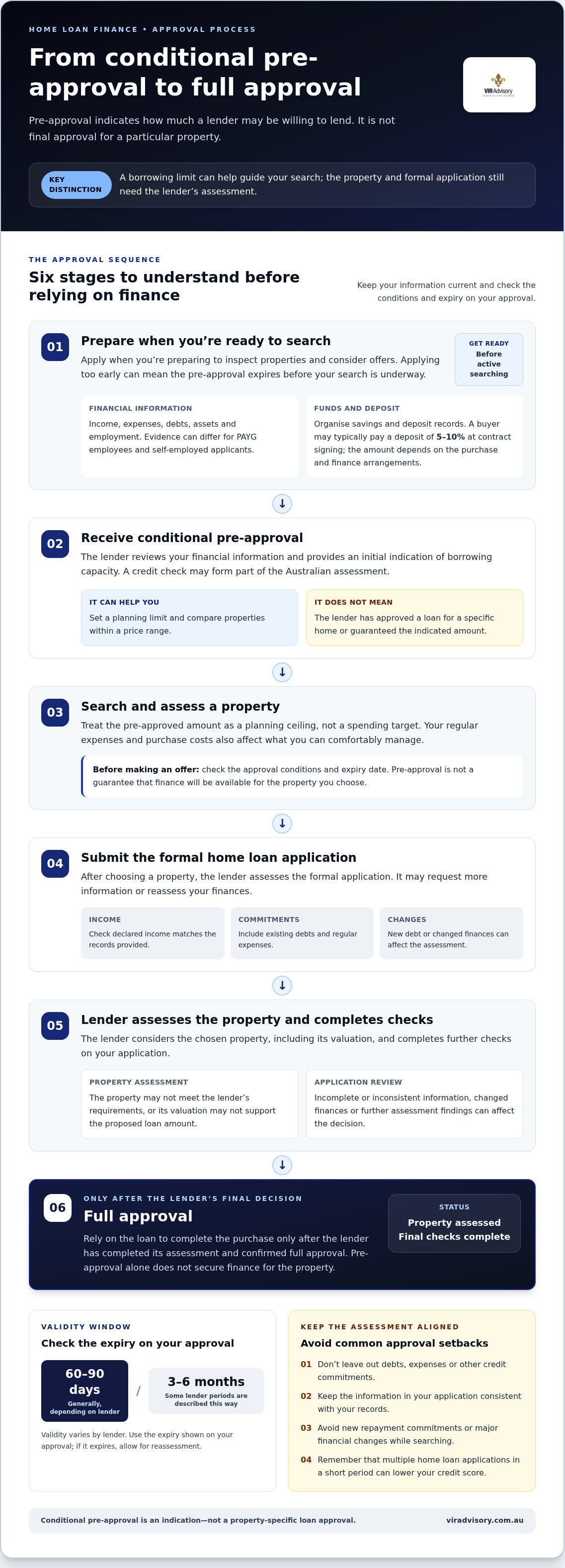
Steps towards full approval after finding a property
After choosing a property, move from the initial assessment to a formal application for full approval. The lender assesses your circumstances and the property, including its valuation, before confirming the loan.
Use these steps to keep the purchase and finance process aligned:
- Review the contract and offer conditions. Check the purchase price, settlement details and any conditions before signing. In Australia, an offer may be subject to finance approval or building and pest inspections if the seller and sale conditions allow.
- Submit the property details. Give the lender the signed contract and information it needs to assess the property. A valuation helps the lender decide whether the property supports the proposed loan amount. If the valuation is lower than the purchase price, the lender may reassess the amount it will lend.
- Complete the formal loan application. Confirm the loan amount and structure, then provide any updated financial information requested. Changes to income, expenses or debts since pre-approval can affect the assessment, so disclose them rather than relying on earlier figures.
- Provide evidence of your funds. Keep records showing your deposit and savings, and account for funds already used towards the purchase. The lender needs a clear picture of how the purchase will be funded, including the amount you plan to borrow.
- Respond to assessment requests and await the decision. Supply any additional documents promptly and read the approval conditions carefully. Home loan applications generally take approximately one to two weeks to process, although the timing depends on the application and lender assessment.
At auction, a successful bid still requires you to complete the lender’s final approval process. The contract may commit you to the purchase before that assessment is complete, so understand your finance position and available funds before bidding. Pre-approval doesn’t guarantee the lender will approve a loan for that property.
If the valuation, contract price or your financial circumstances have changed, address the difference with the lender before making financial commitments based on the earlier assessment. For example, a lower valuation may mean you need to contribute more savings or reconsider the proposed loan amount.
Keep a simple record of the purchase price, deposit funds, contract conditions, lender requests and approval status. That makes it easier to identify what remains outstanding before settlement, rather than assuming the initial assessment has completed the lender’s work.
VIR Advisory: Business Loans
VIR Advisory can help you assess home loan options and prepare for lender requirements after pre-approval. If business income, company commitments or changing cash flow affect your borrowing capacity, VIR Advisory’s financial guidance can help clarify how those details fit into a home loan application.
Business owners may also need to consider business lending alongside a property purchase, since existing repayments and cash flow can affect the lender’s assessment. VIR Advisory offers Business Loans, Home Loans and refinancing solutions, with lending options considered in relation to your circumstances and funding needs.
Consider speaking with VIR Advisory if you need to review your finance position before applying, or if your circumstances have changed since pre-approval. Contact VIR Advisory to discuss your lending requirements.
Prepare your next finance decision
Before committing to a purchase, consider how the loan will fit your finances after settlement, not only whether the lender can approve it. Review proposed repayments alongside your regular expenses, savings buffer and any expected changes to income or existing commitments. This gives you a practical basis for deciding whether a property remains suitable as the purchase progresses.
A home loan pre-approval can inform early decisions, but your next step is to keep the application aligned with the property and your current financial position. If something changes, such as your employment, debt or purchase details, raise it during the formal assessment rather than relying on information provided earlier. Clear communication can help keep the finance process orderly.
VIR Advisory can discuss your home loan requirements and the finance considerations affecting your application. A focused review can help clarify what information to prepare and which questions to resolve before you proceed.
With your finance details in view, you can take your next step with greater clarity.
Frequently Asked Questions
When should you apply for pre-approval?
Apply once you’re prepared to inspect homes and make a considered offer, rather than while buying is only a future possibility. A useful readiness check is whether you’ve set a purchase budget, identified the type of property you’ll pursue and discussed unusual income or ownership arrangements with the lender. These details help frame the assessment around the purchase you actually intend to make.
How long does pre-approval last?
The lender’s approval letter or email should state its expiry date and any review conditions. Record that date alongside your property-search notes, then ask the lender what it needs if your search continues. For example, it may want updated details before reviewing the application again. Don’t assume an earlier decision remains current simply because your income and plans appear unchanged.
What happens after pre-approval?
Keep the lender’s correspondence and approval conditions with your purchase records. As you progress, note any requested information, who is responsible for providing it and the relevant deadline. If the contract details or intended loan structure differ from your original plan, raise the difference promptly. This gives you a clear record of outstanding items instead of relying on informal assumptions.
What is pre-approval and how does it work?
Pre-approval is an initial lender assessment of your finances, giving an indication of potential borrowing capacity. Read the decision as a lender-specific assessment with conditions, not as a complete assessment of every property you might consider. For example, note the assumptions the lender used about your income and existing commitments, then tell them if those details change before you proceed.
Am I guaranteed to be able to borrow the amount that I receive pre-approval for?
No. The amount in a pre-approval isn’t a promise to lend that sum. Treat it as an assessment based on the information and assumptions considered at that stage. If the final amount is lower than expected, review the difference against your planned contribution and purchase budget before making further commitments. Keep a record of any revised figure and the lender’s explanation.
What about placing an offer on a property ‘subject to finance’?
A subject-to-finance condition can make an offer dependent on obtaining finance, if the seller agrees and the contract includes suitable terms. Before signing, understand the clause, the timeframe for satisfying it and any notice steps. These details can affect your options if finance is delayed or declined. Have a conveyancer or solicitor explain the wording before relying on the condition.
What is home loan pre-approval in Australia?
Home loan pre-approval in Australia is a lender’s conditional indication of potential borrowing capacity after an initial assessment. It can help you plan how to approach property negotiations, but it isn’t a required step for every home loan application. For first-home buyers considering a government scheme, assess scheme eligibility separately and include its requirements in your purchase planning.
How do I apply for home loan pre-approval in Australia?
To apply for home loan pre-approval in Australia, first clarify whether the property will be your home or an investment, and whether the application involves one or more borrowers. Then provide the lender with the financial information and supporting records it requests. Keep a copy of what you submit and track follow-up requests so you can respond consistently if the lender asks for clarification.

Article by
Raina Doshi
Raina Doshi has worked in banking and finance since 2011, including experience with major Australian lenders. She helps homeowners, property investors, business owners and professionals secure and structure lending solutions across home loans, refinancing, commercial finance and business lending.
Areas of expertise include residential lending, investment property finance, debt recycling, commercial property finance, equipment finance, construction finance and strategic debt structuring.
Drawing on extensive banking and finance experience, Raina helps clients navigate lender requirements, improve borrowing outcomes and structure effective finance solutions.
Disclaimer
The information in this article is general in nature and does not take into account your personal objectives, financial situation or needs. Before acting on any information, consider whether it is appropriate to your circumstances and seek professional advice.


