

Could the business you’re buying generate enough cash to meet repayments after the sale? Finance to buy a business may be structured as a business loan, asset finance or commercial property finance, depending on what the purchase includes, the security available and your financial position. Not every part of a deal will necessarily be funded in the same way, so understand the likely funding mix before you commit.
It’s reasonable to be unsure how a lender will assess the opportunity, particularly if the sale includes goodwill, equipment, stock or property, or the target’s records are incomplete. Lenders commonly examine the business’s financial performance and cash flow, your contribution and capacity to service debt, available security, and your relevant experience. They may also request financial statements, tax returns, forecasts and details of your assets and liabilities.
This article explains potential finance structures, what lenders may ask for and how to prepare an application. It also outlines how to test whether projected cash flow could support repayments, identify documentation gaps early and plan for the full purchase, not just the headline sale price.
Key Takeaways
- Finance to buy a business may involve business lending, asset finance or commercial property finance, depending on the deal and what’s being purchased.
- Assess whether the business’s cash flow and your financial position can support proposed repayments, while accounting for existing liabilities.
- Compare potential finance structures by their intended use, security requirements, repayment obligations and effect on cash flow.
- Prepare business and personal financial records, clarify your contribution and map the purchase components before discussing funding.
- An Australian finance brokerage can help you consider lender options and identify questions to resolve before committing.
Finance to buy a business: what can acquisition funding cover?
Finance to buy a business may fund an eligible business purchase, subject to lender assessment. The amount and structure available depend on factors such as your financial position, the target business’s performance, the transaction structure and any security offered. A lender may assess the purchase as several components rather than one total, so don’t assume every item in the sale agreement can be financed through the same facility.
Acquisition finance is intended to fund the purchase itself. It differs from working capital finance, which can help meet business expenses after completion, and equipment finance, which is directed towards eligible equipment or assets. If commercial property is part of the deal, a lender may assess it separately under commercial property finance. These facilities have different purposes, and their availability and terms depend on lender criteria.
Which parts of a business purchase might be financed?
A lender may distinguish between identifiable business assets, goodwill and property included in the sale. For example, a purchase might include equipment, stock, customer relationships and premises. Asset or equipment finance may be relevant to eligible identifiable assets, while goodwill may be assessed differently as part of the overall acquisition. Property in the transaction may require a separate commercial property finance assessment. Ask which components the lender will consider and what security it may require.
Business purchase, asset purchase or share purchase?
In a business purchase, the buyer acquires an operating business, with the specific inclusions set out in the transaction. In an asset purchase, the buyer acquires specified assets rather than the company itself. In a share purchase, the buyer acquires shares in the company that operates the business. These structures can affect what the lender needs to review, how it views available security and which records are relevant. Confirm the legal, accounting and tax implications with appropriately qualified advisers before agreeing to a structure.
Transaction structure also shapes how a lender views funding risk. A buyer using substantial borrowing to fund an acquisition is broadly following the concept of a Leveraged Buyout (LBO), although this term doesn’t determine whether a lender will approve an application. The lender will still assess the buyer, business information, cash flow and proposed repayments.
Before committing, prepare a clear breakdown of the purchase price and identify what it covers, such as business assets, goodwill, stock and property. Then ask how each component could be funded, what security may be required and whether working capital needs to be arranged separately. Lender policies differ, so confirm eligibility and documentation requirements for the proposed transaction with the relevant lender or finance specialist.
How lenders assess finance applications to buy a business
Lenders assess whether the proposed debt can be repaid by considering your financial position alongside relevant information about the target business and transaction. They may review earnings, cash flow, existing liabilities, the requested facility and available security. Your contribution may also be considered, but requirements vary. Assessment criteria differ between Australian lenders, facility types and applications, so confirm current requirements for the finance you’re considering.
For a business acquisition, serviceability is the lender’s assessment of whether available business cash flow and your financial capacity can support proposed repayments alongside other obligations. A business may report a profit, for instance, while having limited cash available because customers are taking longer to pay invoices or substantial operating expenses fall due.
What business and financial records may lenders request?
The documents requested depend on the buyer, target business, transaction and lender. A lender may ask for:
- Business financial statements, including profit and loss statements and balance sheets, plus relevant tax information.
- Current trading records to compare recent performance with historical results.
- Forecasts showing expected cash flow and profit under the proposed ownership, with assumptions explained.
- Your assets, liabilities, existing debt commitments, purchase contribution and relevant industry experience.
- Details of the purchase structure, funding request and any proposed security.
Consistent records help a lender assess how the business earns income, what financial commitments already exist and whether forecast figures are supported. Check the lender’s current document requirements early. Missing or conflicting information may lead to follow-up questions.
How cash flow, security and buyer capacity affect assessment
Consider proposed repayments alongside operating expenses, existing commitments and the working capital needed to keep the business running. Forecasts should use defensible assumptions supported by available records. If expected sales growth relies on new contracts or other changes that aren’t confirmed, identify that clearly rather than presenting it as established income.
A lender may also assess your broader financial position and any security offered, including how existing debts affect repayment capacity. These factors aren’t automatic approval rules, and don’t assume that a particular asset or contribution will meet a lender’s requirements. Confirm the applicable criteria with the lender or an Australian finance broker before relying on a proposed structure.
Compare business acquisition finance structures, benefits and risks
The right finance to buy a business depends on what the transaction includes, your borrowing capacity and the lender’s criteria. Business lending, asset finance and commercial property finance each serve different purposes. A single acquisition may involve a combination of facilities if the lender approves them, but no structure is automatically the best fit.
| Finance structure | Potential application | Benefits and risks to assess |
|---|---|---|
| Business lending | May contribute to an eligible business acquisition, subject to the lender’s assessment of the buyer, target business and transaction. | Can be considered for broader purchase funding, but approval, eligible costs, security and repayment terms vary. Repayments need to be supportable from cash flow. |
| Asset or equipment finance | May fund eligible identifiable assets included in the purchase, such as equipment, subject to lender assessment. | Funding linked to an asset may help separate that cost from other acquisition needs. Check what security applies and whether repayments leave enough cash for operating costs. |
| Commercial property finance | May apply where the transaction includes commercial premises and the property component can be assessed separately. | Property may provide relevant security, but lenders assess the property and borrower under their criteria. Property repayments still need to fit the wider business cash flow. |
Business lending versus asset or equipment finance
Business lending may be considered for an acquisition, but don’t assume it will cover every item in the sale agreement. Asset or equipment finance is tied to eligible assets rather than the entire business purchase. If a transaction includes equipment and goodwill, for example, a lender may assess those components differently. Ask how each facility’s repayments and security would interact, then consider their combined effect on cash flow.
When commercial property finance may be relevant
If premises are included, the property component may be assessed separately from the operating business where the transaction permits. A lender may consider property security alongside your financial position, while assessing the business’s ability to meet operating costs and related debt commitments. Separating the components can clarify the funding request, but it doesn’t guarantee approval or mean property debt can be assessed without regard to overall repayment capacity.
Before choosing a structure, map the purchase components and identify which facility may relate to each one. Then compare proposed repayments, security and the cash remaining for working capital. Confirm eligible costs and lender requirements for the specific transaction. For premises funding, consult a commercial property finance guide and check that its information reflects the lender and property type you’re considering.
Prepare a business purchase finance application: a practical checklist
A well-organised application connects the purchase terms to the amount of funding requested and shows how the business may meet repayments after completion. Use this checklist to find gaps before approaching lenders. Document requirements and assessment timeframes vary, so confirm what applies to your transaction and allow time to respond to follow-up requests.
Before approaching lenders: define the deal and funding gap
Prepare a concise transaction summary that explains what’s being acquired, how the purchase is structured and when completion is expected. Set out your available contribution, the amount you expect to borrow and the cash the business will need immediately after the purchase. Keep estimates separate from confirmed figures so questions can be addressed before they affect an application.
Application preparation checklist
- Match the records to the deal. Check that the business information relates to the entity and assets included in the proposed purchase. Note missing periods, unexplained changes or figures that don’t reconcile.
- Prepare a funding schedule. List the purchase components, available contribution, proposed finance and expected operating cash requirements. Mark any item where the funding source is not yet confirmed.
- Review repayment assumptions. Compare forecast cash available with proposed repayments and normal operating outgoings. Make assumptions explicit and avoid relying on unconfirmed sales, cost reductions or contracts.
- Set out your financial position. Organise current information about your assets, liabilities and existing commitments, and be ready to explain how these affect the funds available for the acquisition.
- Record due diligence questions. Identify issues requiring confirmation in the transaction documents or business records. Obtain legal and accounting due diligence from appropriately qualified advisers. Finance assessment doesn’t replace those checks.
- Confirm lender-specific requirements. Before lodging an application, ask what documents, security information and transaction details are needed, and how the lender will assess the proposed facility.
Common finance application mistakes and how to avoid them
Relying on headline revenue can obscure costs, liabilities and the timing of cash receipts. Check what remains after operating expenses and whether cash is available when repayments fall due. Incomplete or inconsistent records can prompt more questions, so identify gaps and correct errors rather than leaving the lender to reconcile them.
Don’t assume a lender will accept your preferred security, purchase structure or forecast assumptions. Confirm requirements early and allow time for additional information requests. Include working capital in the funding estimate. Using all available funds for the purchase can leave too little cash for the business’s immediate operating needs.
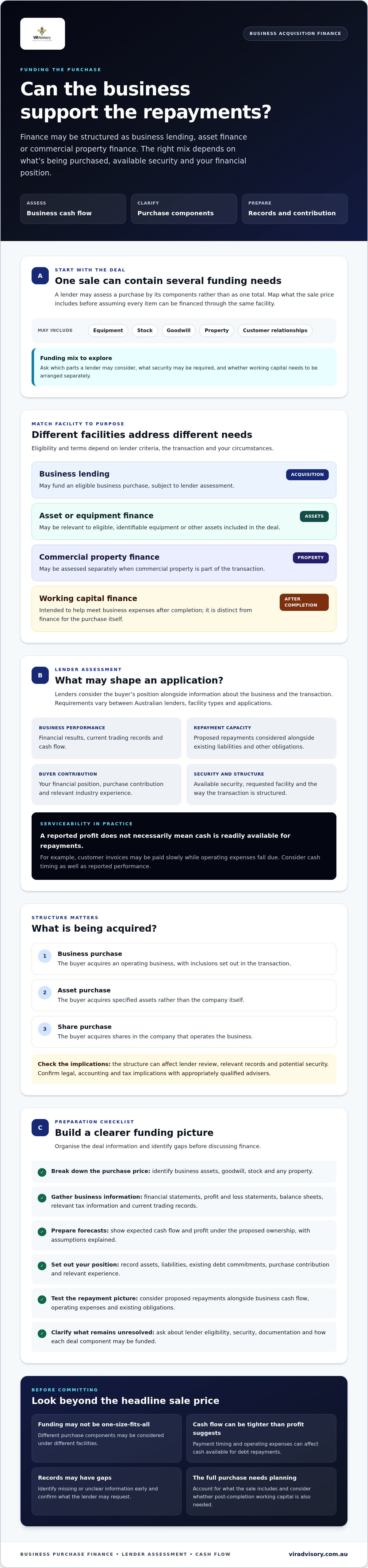
Infographic: Business purchase finance preparation
- Define: transaction terms, components and expected completion.
- Organise: buyer and business records, noting gaps or inconsistencies.
- Assess: funding required, working capital and repayment assumptions.
- Confirm: due diligence questions and lender-specific requirements.
Discuss business acquisition finance options with VIR Advisory
VIR Advisory is an Australian finance brokerage, not a direct lender. For a proposed acquisition, an initial discussion can help clarify what the transaction includes, the funding gap and which lender questions need to be resolved before you commit. Raina Doshi brings over 15 years of banking and finance experience, including more than a decade with one of Australia’s leading banks.
Business acquisition finance is assessed against the details of the buyer, the target business and the proposed deal. A discussion can help you organise those details and consider whether business lending, asset finance or commercial property finance may be relevant to different purchase components. Eligibility, available facilities and approval remain subject to the lender’s assessment and criteria.
What to have ready for an initial finance discussion
You don’t need to have every detail finalised, but a concise summary makes it easier to identify gaps and useful next steps. Prepare:
- A summary of the business, what’s included in the sale and the proposed purchase structure.
- Anticipated completion timing and any key transaction milestones.
- An estimate of the purchase funding required, your proposed contribution and expected working capital needs.
- Available financial records for the target business, plus an outline of your own assets, liabilities and existing commitments.
- Questions about possible security, repayment capacity and the documents a lender may request.
Note any uncertain information, such as gaps in the target’s records or assumptions in its forecasts. This helps distinguish what can be discussed with a finance broker from matters requiring further verification through legal, accounting or other qualified advice.
How a broker can help assess business lending options
A finance broker can help compare relevant lender criteria with the proposed transaction and organise information for an application. This may help you understand which details a lender could focus on, where additional records may be needed and how the requested facility relates to the purchase components. It doesn’t guarantee eligibility or approval, and lender requirements can differ by facility and application.
VIR Advisory brokers business loans and commercial finance. You can review its business and commercial finance services to understand the relevant areas of support. Keep legal, accounting and tax due diligence with appropriately qualified advisers, and confirm specific lending conditions with the lender assessing the application.
If you’re considering finance to buy a business, an initial discussion can help you organise your proposed purchase details and funding questions. View the booking details for a business purchase finance discussion.
Set out your funding plan before you commit
Finance to buy a business isn’t a single standard facility. The purchase structure, included assets or property, your financial position and the target’s cash flow all shape which options a lender may consider. Match potential facilities to relevant purchase components, then test proposed repayments against operating costs and working capital needs.
Organise available buyer and business records, prepare forecasts based on supportable assumptions, and identify gaps early. Discuss lender requirements before committing, and arrange legal and accounting due diligence with appropriately qualified advisers.
VIR Advisory is an Australian business loan and commercial finance brokerage, not a direct lender. Led by Raina Doshi, who has over 15 years of banking and finance experience, the brokerage can help you consider relevant lender criteria and prepare funding questions. Eligibility and approval remain subject to lender assessment.
Frequently Asked Questions
What finance can I use to buy a business?
Potential options include business lending, asset or equipment finance, and commercial property finance if premises form part of the purchase. The suitable structure depends on the transaction, eligible assets, cash flow, your borrowing capacity and lender policy. A purchase involving equipment and commercial property, for example, may need more than one facility. Before relying on a proposed structure, confirm its legal, tax and accounting implications with appropriately qualified advisers.
Can I get a business loan to buy an existing business?
A business loan may be an option, but approval isn’t automatic. Lenders assess your financial position, the target business, available records, repayment capacity and the proposed transaction. Requirements vary between lenders and facilities. Prepare accurate financial information and a clear summary of what the purchase includes, then confirm whether the proposed loan may support that specific acquisition before making commitments that depend on funding.
How do lenders assess finance to buy a business?
Lenders assess whether the proposed repayments appear supportable, considering your financial position and information about the business. They may review cash flow, financial records, existing liabilities, security and transaction details. The assessment and documents required depend on the lender and deal. Past performance alone may not show how the business will operate under new ownership, so provide clear information about expected trading, costs and repayment capacity.
Can I borrow to cover goodwill when buying a business?
Whether a lender will fund goodwill depends on the facility, transaction and its assessment criteria. Goodwill may be treated differently from identifiable assets or property, so don’t assume it will be funded in full or accepted as security. Ask how the purchase price should be allocated for assessment and confirm the lender’s position before proceeding. Seek legal and accounting advice on the transaction structure and its implications.
Do I need to provide security for a business acquisition loan?
Security requirements vary with the lender, facility, borrower and transaction. A lender may consider business or personal assets, but don’t assume a particular asset will be accepted or that security will always be required in the same form. Ask how proposed security could affect existing borrowing and what obligations may apply to any guarantor. Before agreeing to security or guarantee terms, obtain independent legal advice.
What documents do I need to apply for business acquisition finance?
Document requirements depend on the lender and proposed deal. A lender may request details of your finances, the target business’s financial statements, tax information, current trading records and documents describing the purchase. Further evidence may be requested as assessment progresses. Check the lender’s current document list, and make sure the records you provide are complete and consistent. A finance broker may help identify information gaps before submission.
When should I arrange finance when buying a business?
Start discussing finance while assessing the purchase and before making commitments that depend on funding. Early preparation gives you time to understand potential lender requirements, gather records and identify questions about transaction structure, security or cash flow. It doesn’t guarantee approval or a particular timeframe. Coordinate finance discussions with legal and accounting due diligence, and confirm relevant dates with the parties involved in the proposed transaction.

Article by
Raina Doshi
Raina Doshi has worked in banking and finance since 2011, including experience with major Australian lenders. She helps homeowners, property investors, business owners and professionals secure and structure lending solutions across home loans, refinancing, commercial finance and business lending.
Areas of expertise include residential lending, investment property finance, debt recycling, commercial property finance, equipment finance, construction finance and strategic debt structuring.
Drawing on extensive banking and finance experience, Raina helps clients navigate lender requirements, improve borrowing outcomes and structure effective finance solutions.
Disclaimer
The information in this article is general in nature and does not take into account your personal objectives, financial situation or needs. Before acting on any information, consider whether it is appropriate to your circumstances and seek professional advice.


