

What happens when the right property comes along before your current home has sold? Purchase and sale dates may not align, leaving you to manage overlapping loans, repayments and settlement deadlines. Bridging finance can provide temporary funding to buy before you sell, but the numbers need to work both while the loans overlap and after the sale. When comparing bridging finance Australia options, look beyond whether you can complete the purchase: check the peak debt, likely end debt and whether your exit plan is realistic.
Lenders assess the full position, including existing debt, the proposed purchase, property valuations, income and capacity to manage repayments. If the sale takes longer than expected or achieves a lower price, you could be left with a larger balance or a longer period of overlapping commitments.
This article explains how bridging finance works in Australia, what lenders may assess and how to estimate peak debt and end debt. It also compares open and closed sale plans, common approval obstacles and other funding structures to consider when property, sale or business cash flow dates don’t line up.
Key Takeaways
- Bridging finance Australia may cover a temporary funding gap when purchase and sale dates don’t align, but suitability depends on lender assessment and a credible exit.
- Estimate peak debt and expected end debt to understand your borrowing exposure before committing to a purchase.
- Compare bridging finance with waiting for a sale, refinancing or another loan structure. Weigh timing flexibility against repayments, fees and sale risks.
- Prepare information about your income, liabilities, assets, security, property valuations and supporting documents for lender assessment.
- Set out the purpose, amount required, repayment capacity and exit plan. Test whether the figures still work if the sale is delayed or proceeds are lower than expected.
What is bridging finance in Australia, and when might it help?
Bridging finance may cover a temporary funding gap when a purchase or other funding need arises before expected sale proceeds or other funds become available. Whether it suits you depends on the purpose, total debt, repayment capacity, security and proposed exit, as well as the lender’s criteria.
Bridging finance is short-term funding intended to cover a timing gap, with repayment relying on a planned exit such as a property sale or another source of funds. The structure depends on the borrower’s circumstances and the lender’s terms. For a general overview of how bridging loans function, see What is a Bridging Loan?
Bridging finance is often discussed in connection with property purchases. A business funding delay is a different situation and may require a different loan structure. Start by identifying the event that will provide funds to repay the borrowing, then consider whether its timing and likely proceeds are credible.
How a property purchase-before-sale gap can arise
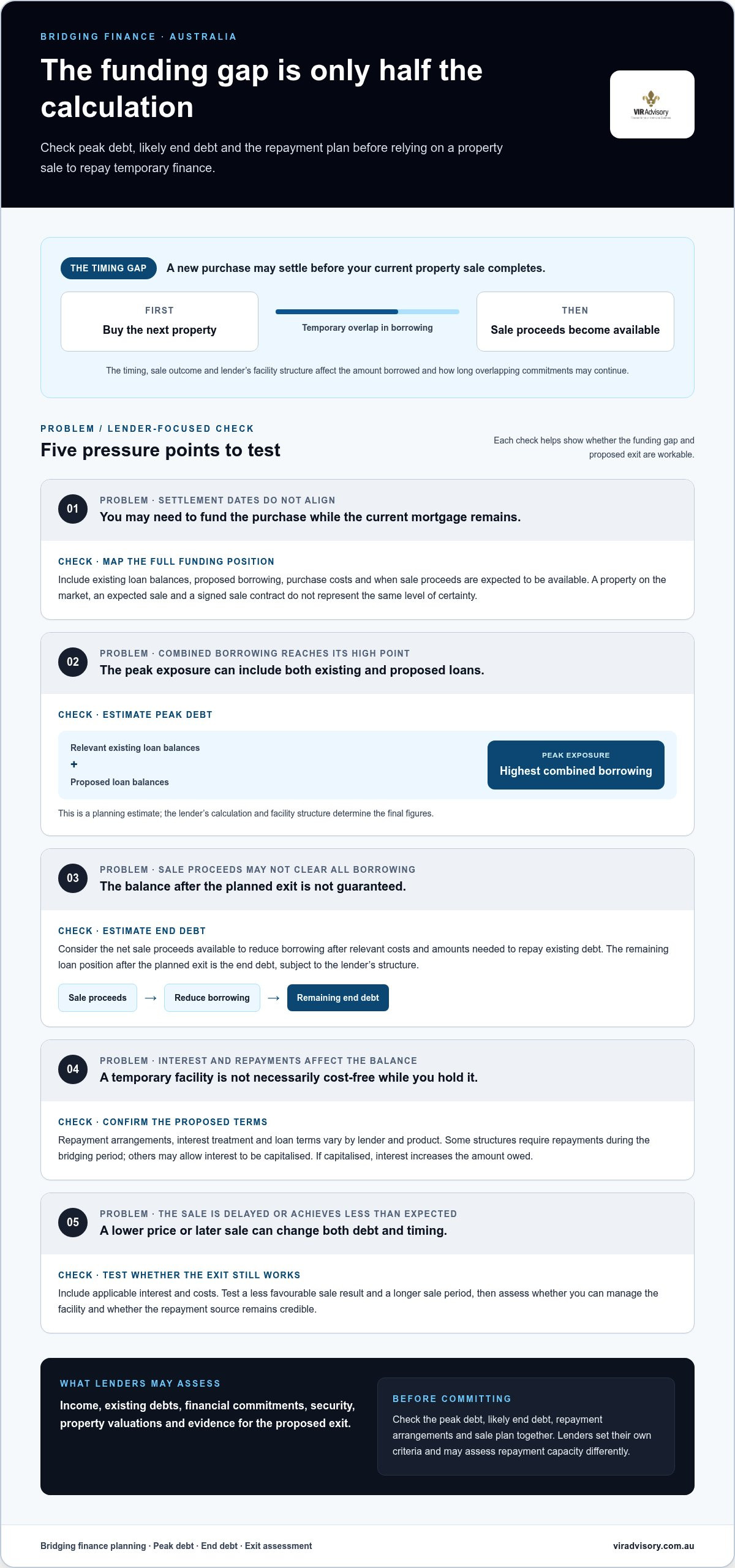
Suppose the settlement date for a new home arrives before the sale of your current property completes. You may need finance to complete the purchase while still carrying the existing mortgage. The lender’s assessment may consider your current debt, proposed borrowing and anticipated sale proceeds. Contract dates, settlement timing and the plan for selling the property help define the funding gap.
Build the estimate from the full funding position, not just the purchase price. Include existing loan balances, purchase costs and the time when sale proceeds are expected to become available. An expected sale, a property on the market and a signed sale contract represent different levels of certainty. If the sale is delayed or the price is lower than expected, the borrowing required and the length of time you carry it may change.
When a business may consider short-term finance
A business might face a temporary gap when a transaction or expected receipt is due after a payment or acquisition must be funded. That timing pressure does not automatically make bridging finance suitable. Lenders assess the borrower, purpose, cash flow and repayment source, and a business facility may be structured differently from property bridging. If the need is ongoing, working capital finance may be more relevant. Equipment finance may suit an eligible asset purchase.
The distinction matters: temporary timing finance depends on a defined exit, while recurring working capital or equipment needs should be assessed against their own purpose and repayment capacity. Treating a repeated cash flow shortfall as a one-off gap can leave a business needing replacement finance before the original borrowing is repaid.
For either property or business funding, write down the key dates, expected funds and repayment source before applying. Then test what happens if a sale, transaction or incoming payment is delayed, or the amount received is lower than expected. This helps show whether the exit remains workable and whether another funding structure better matches the need.
How bridging finance works: peak debt, repayments and the exit
To assess a bridging loan, work out how much you may owe at the highest point, what balance could remain after the planned sale or other exit, and how repayments will be managed in the meantime. Peak debt is the highest combined borrowing exposure during the bridging period, where applicable. End debt is the remaining loan position after the planned exit, subject to the lender’s structure.
As a starting estimate, add the relevant existing and proposed loan balances to identify the peak exposure. To estimate end debt, consider the net sale proceeds available to reduce the borrowing, after relevant costs and the amounts needed to repay existing debt. The lender’s calculation and facility structure determine the final figures.
Repayment arrangements, interest treatment and loan terms vary by lender and product. Some structures require repayments during the bridging period; others may allow interest to be added to the loan balance. If interest is capitalised, it increases the amount owed. Include it in your estimates rather than treating the temporary period as cost-free.
What peak debt and end debt mean for a borrower
Consider a borrower who still owes money on an existing property and takes out additional finance to buy another. While both loans are outstanding, their combined exposure may reach its peak. After the existing property sells, available proceeds may be applied to reduce the borrowing, leaving an end debt. The result depends on the sale proceeds, costs, lender calculations and loan structure.
These are planning figures, not guaranteed outcomes. If your estimate assumes a particular sale price or completion date, you may understate the eventual balance if the property sells for less or later than expected. Test a less favourable sale result and include applicable interest and costs under the proposed terms.
How lenders may assess the proposed exit
A lender may consider evidence for the proposed exit, such as the sale plan or prospects of refinancing, alongside income, existing debts and other financial commitments. The assessment helps establish whether you can manage the facility and whether the expected repayment source is credible. Lenders set their own criteria and may assess repayment capacity differently, so requirements and available structures vary.
Make the sequence clear: the borrowing required, the planned sale or alternative exit, when funds are expected and the balance anticipated afterwards. If refinancing is part of the plan, consider whether your income and liabilities could support a new loan at that time. A useful companion topic is How Borrowing Capacity Is Actually Calculated in Australia, particularly for understanding how existing commitments may affect an application.
The exit plan determines how temporary borrowing is expected to be repaid. For bridging finance Australia, test that plan against delays, lower proceeds and the possibility that refinancing may not proceed as expected. Read the lender’s written terms so you understand the repayment arrangements and conditions before proceeding.
Bridging finance benefits and risks compared with other options
Bridging finance may provide flexibility when a transaction needs to proceed before expected funds are available. That flexibility comes with repayment exposure, fees and reliance on a successful exit. Waiting for a sale, refinancing or choosing another suitable loan structure changes the timing and debt profile, but none is automatically faster, cheaper or easier to secure. Compare options against transaction deadlines, available cash flow and your capacity to manage repayments.
Finance option comparison
- Bridging finance: May suit a temporary timing gap. Repayment is expected from a sale or another planned exit. The main exposure is a delayed or less favourable exit, and lender terms vary.
- Wait for a sale: Make the next purchase or commitment after the sale. Proceeds may then contribute to the next transaction. The trade-off is that the preferred purchase may no longer be available.
- Refinance: Replace or restructure existing borrowing, subject to lender assessment. Repayments follow the new facility’s terms, and approval and affordability are not certain until assessed.
- Another loan structure: Match funding to a specific property or business purpose. Repayment may rely on income or business cash flow, so check that the structure and repayments fit the need.
Decision lens: Compare timing, repayment source and the consequences if expected funds arrive late or are lower than planned.
When bridging finance may be worth assessing
Bridging finance may be worth assessing when transaction timing is the main constraint and the proposed exit has supporting evidence. The temporary borrowing must still fit your income and repayment capacity. A property investor managing the timing of a purchase and sale has a different funding purpose from a business owner bridging the gap between a payment and an incoming receipt. Security, cash flow and lender assessment may differ too.
Risks and common mistakes to avoid
A common mistake is treating an expected sale price or date as certain, or assuming a future refinance will be approved without reassessing income, liabilities and lender criteria. Another is overlooking overlapping repayments and other household or business commitments, which can put pressure on cash flow.
Before proceeding, model a delayed exit and a lower-than-expected sale result. Check whether your cash flow could manage the revised position, including applicable fees and interest under the proposed terms. Expected proceeds and preliminary lender discussions are not the same as funds received or final approval. If the changed scenario makes repayment unworkable, reconsider the transaction timing or compare another funding structure before committing.
Bridging finance eligibility: a practical Australian borrower checklist
Preparing an application for bridging finance Australia starts with clear figures and a credible repayment plan. Lenders may review income, liabilities, assets, security, property valuations and supporting documents, but their eligibility rules and assessment methods vary. Use this checklist to organise your position and identify missing information. It cannot guarantee approval.
A clear exit plan identifies the repayment source, expected timing, supporting evidence and the effect of a delay or lower-than-expected proceeds.
- Define the purpose. Explain what the borrowing will fund and why the dates create a temporary funding need. For a business, distinguish a one-off transaction gap from an ongoing cash flow requirement.
- Estimate the borrowing need. Set out existing loan balances, proposed borrowing and expected sale proceeds or other funds. Keep assumptions separate from confirmed figures.
- Review repayment capacity. List income, regular commitments and liabilities. Consider whether cash flow could manage the proposed repayments if the exit takes longer than expected.
- Document the exit. Describe how and when the loan is expected to be repaid, and gather available evidence for the sale, refinance or other repayment source.
Information to organise before an application
Bring together current loan details, income records, liabilities and relevant asset information. For property borrowing, organise your sale or refinance assumptions and supporting information about the proposed transaction. In Australia, purchase costs can include state or territory duties, so include applicable transaction costs in your funding estimate. The lender may arrange its own valuation; do not treat an assumed value as an accepted figure.
For business borrowing, clarify the funding purpose, cash flow position and proposed repayment source. Keep the figures consistent across documents and distinguish actual balances from estimates. This makes it easier to see how the funding request, repayment capacity and proposed exit fit together.
Approval obstacles and ways to strengthen the application
An application can be harder to assess when figures do not reconcile across documents, the exit is vague, cash flow appears tight or a valuation assumption lacks support. Before lodging, compare income and liability information across records, update loan balances and check that the proposed funding need matches the stated purpose. Test a delayed exit and lower proceeds, then show how repayments and commitments would be managed in those conditions. These steps improve clarity, but the lender still assesses the full application against its own criteria.
When the purpose involves buying or refinancing a business property, consider the security, transaction and repayment plan together. Review commercial property finance requirements alongside the proposed short-term funding rather than assuming a property transaction and a business cash flow facility will be assessed in the same way.
Before lodging an application, check that the figures, supporting documents and stated purpose are consistent. Clearly label estimates that still require assessment.
Assess your bridging finance options with VIR Advisory
Bridging finance Australia applications need to be assessed against the whole borrowing position, not just the purchase price or expected sale proceeds. VIR Advisory can review the purpose, cash flow, current debt, proposed security and intended exit, then compare relevant structures across a lender network. Approval and terms depend on the application and lender criteria, so a comparison cannot promise a particular outcome.
For a property purchase, the review can bring settlement dates, existing loan commitments and expected sale proceeds into one assessment. For a business funding need, the focus may include the transaction purpose, cash flow position and repayment source. In either case, examine the proposed exit alongside your capacity to manage commitments if the timing changes.
What to cover in an initial finance discussion
Start with a clear summary of the transaction, required timing, current commitments and intended repayment source. Available income, asset, liability and property information can help build a complete view of the application and identify figures that need further support.
Separate confirmed information from assumptions. A target sale price, expected settlement date or future refinance may inform an initial assessment, but each remains subject to evidence and lender review. Identifying what is established and what remains uncertain makes it easier to test the exit without treating an estimate as settled fact.
VIR Advisory founder Raina Doshi has more than 15 years of banking and finance experience, including more than a decade with one of Australia’s leading banks. That experience supports a practical review of how the transaction, existing debt and repayment plan fit together.
Next steps for a considered application
A tailored assessment can identify finance structures that may suit the stated purpose, information a lender may require and assumptions that need clarification. It can also help compare the proposed bridging facility with other relevant options, considering cash flow and repayment exposure rather than viewing the timing gap in isolation.
VIR Advisory provides brokerage services, connecting borrowers with lenders rather than lending directly. Its business and property finance services include support relevant to home purchases, refinancing and business funding needs. To start an assessment, submit a finance enquiry with the transaction details and information you have available. Lender requirements and outcomes depend on the application and lender assessment.
Set clear decision points before you proceed
Before committing to a purchase, decide what could change your financing decision: a later sale, lower proceeds, altered income or a lender condition that affects the proposed structure. Set out the point at which the borrowing would no longer fit your cash flow and identify an alternative to consider. This gives you a practical decision framework rather than relying on one forecast.
If bridging finance Australia is under consideration, use your figures and documents to identify what remains uncertain and what needs lender assessment. Compare the proposed facility with other relevant structures, including the repayment exposure if the expected sale or refinance is delayed.
Use that assessment to confirm whether the transaction still fits your budget and repayment capacity under a less favourable scenario. To discuss your bridging finance requirements with VIR Advisory, book a conversation using the link below.
A considered decision starts with clear assumptions and a realistic view of what you can manage.
Frequently Asked Questions
What is bridging finance in Australia?
Bridging finance is short-term borrowing that may help cover a funding gap, often when a property purchase and sale happen at different times. Structure, repayment requirements and eligibility depend on the lender and borrower’s circumstances. Before proceeding, map total debt exposure and identify a credible repayment exit, such as sale proceeds or a refinance assessed for feasibility.
Can I get bridging finance if my property has not sold?
A property does not necessarily need to be sold before a lender assesses a bridging finance request, but approval is not automatic. The lender may review the proposed sale, property valuation, existing debts, income, repayments and exit plan. Policies differ, so do not rely on expected proceeds to complete another purchase until the lender has assessed your circumstances and explained the applicable conditions.
How long can bridging finance last in Australia?
The available term depends on the lender, product and borrower’s circumstances. Do not assume a sale or refinance will happen within a particular period just because it is expected. Before committing to a purchase, understand the proposed term, repayment arrangements and consequences of a delayed exit. Include key dates in your budget and reassess if the sale or refinance timetable changes.
How much does bridging finance cost?
There is no single cost for every borrower or lender. The total may depend on the loan structure, interest treatment, fees, term and whether the exit is delayed. Compare the full repayment position and applicable charges in the lender’s offer, rather than focusing on one headline figure. General estimates may not reflect your circumstances or the terms ultimately offered.
What happens if I cannot sell the property as planned?
A delayed sale can extend the borrowing period and affect cash flow, repayments and the expected remaining debt. The outcome depends on the loan contract and lender’s requirements. Before borrowing, test how your budget would respond to a longer sale period, including other commitments that continue during the delay. Understand the options and consequences in the proposed loan terms, and do not treat a sale date or price as certain.
Can a business use bridging finance in Australia?
A business may seek short-term finance to address a timing gap, but the appropriate structure depends on the purpose, security, cash flow and lender criteria. Assessment may focus on business information and the proposed repayment source, rather than factors relevant to residential borrowing. Set out how the funds will be used, what will repay the facility and how the business would manage a changed timetable.
Is bridging finance the same as a construction loan?
No. Bridging finance addresses a temporary funding gap, while construction finance is generally structured around funding building work. The purpose, drawdown arrangements, repayments and lender assessment can differ, so one is not an automatic substitute for the other. For example, buying a property before a sale and arranging staged funding for construction are distinct requirements. Compare the proposed loan structure with the transaction’s actual funding needs.

Article by
Raina Doshi
Raina Doshi has worked in banking and finance since 2011, including experience with major Australian lenders. She helps homeowners, property investors, business owners and professionals secure and structure lending solutions across home loans, refinancing, commercial finance and business lending.
Areas of expertise include residential lending, investment property finance, debt recycling, commercial property finance, equipment finance, construction finance and strategic debt structuring.
Drawing on extensive banking and finance experience, Raina helps clients navigate lender requirements, improve borrowing outcomes and structure effective finance solutions.
Disclaimer
The information in this article is general in nature and does not take into account your personal objectives, financial situation or needs. Before acting on any information, consider whether it is appropriate to your circumstances and seek professional advice.


