

A business loan declined is a reason to review the application, not a complete verdict on the business. Lenders may be concerned about inconsistent cash flow, limited trading history, insufficient security, incomplete financial records or a director’s credit history. If the explanation is broad, it can be hard to know what to address, especially when cash flow is tight and funding is time-sensitive.
Before applying again, request clearer feedback and review the application against the lender’s assessment: cash flow and existing debt, including any ATO liabilities; the age and quality of financial statements; available security; and director credit history. A different application structure or funding type may fit better, but applying again without understanding the decline could leave the underlying issue unresolved.
This article explains common reasons a business loan is declined, what to review before taking further action and seven alternative funding options. It compares working capital finance, debtor finance, equipment finance, commercial property finance and other structures against the business’s funding need, repayment capacity and potential risks.
Key Takeaways
- A business loan declined is one lender’s decision on one application at a particular time, not a complete measure of business viability.
- Identify whether the issue relates to lender policy, missing evidence, repayment capacity or a mismatch between the facility and funding purpose.
- Review financial records, cash flow, existing liabilities and the amount and purpose of funding before deciding whether to apply again.
- Compare alternative finance structures against their eligibility requirements, costs and repayment risks.
- A finance broker can review the decline and assess whether a different lender or loan structure may better fit the business’s needs.
Business loan declined: what the decision does, and does not, tell you
A business loan declined means a lender has decided not to approve a particular application based on its assessment at that time. It’s a decision about the request presented, not a definitive judgement on the business’s overall viability. The lender may have concerns about its policy fit, the evidence supplied, the proposed loan structure or whether repayments appear supportable. A general overview of the different forms of a business loan, including secured and unsecured borrowing, can help explain why facilities may be assessed differently.
Each lender sets its own assessment approach, and requirements can vary with the facility, purpose and business circumstances. A different lender may assess the same information differently, but that doesn’t guarantee another application will be approved. Treat the decline as a reason to review the request rather than apply elsewhere automatically.
What a declined application means for the business
The lender has assessed a particular combination of borrower, facility, amount, purpose and supporting information. For example, a business seeking funds to buy equipment might apply for a general-purpose loan, even though equipment finance could be a more relevant structure to assess. That doesn’t mean the business will qualify for a different facility. It does identify a question to investigate.
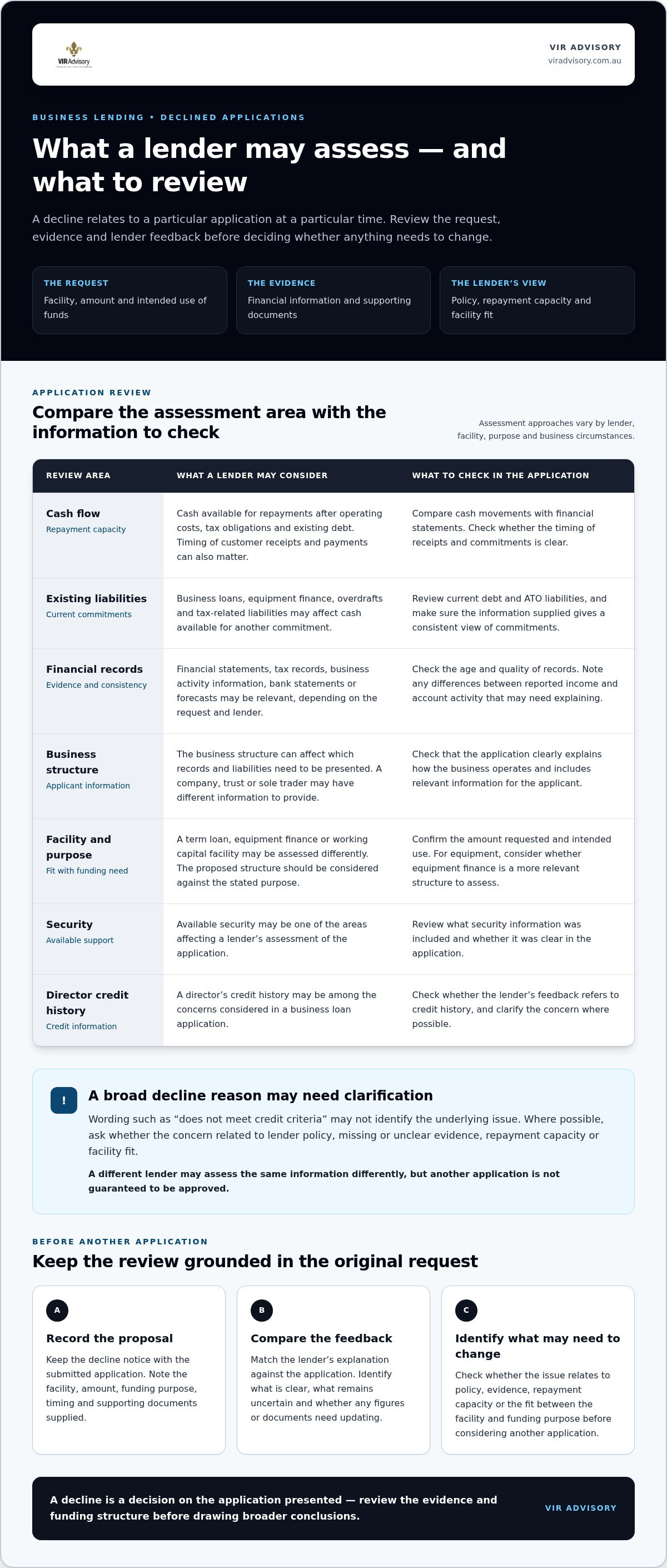
A decline notice may use broad wording, such as “does not meet credit criteria”, without identifying the underlying concern. Where possible, ask the lender whether the issue related to policy, missing or unclear evidence, repayment capacity or facility fit. A more precise explanation helps you decide what, if anything, needs to change.
What to do first after receiving the decision
Keep the decline notice and the submitted application together. Record what you requested and why, so any review is based on the original proposal rather than memory. Capture:
- The facility and amount requested.
- The intended use of the funds.
- The proposed timing and relevant business commitments.
- The financial information and supporting documents supplied.
Then compare the application with the lender’s feedback. Check whether the figures and documents gave a consistent view of the business, and note any information that needs explanation or updating. Avoid repeated applications just to see whether another lender says yes. If the original concern remains unresolved, a new application may present the same issue. Establish what the decision tells you, what remains uncertain and whether the funding request or supporting evidence needs a considered change.
How Australian lenders may assess a business loan application
There isn’t one assessment method used by every Australian lender. The review can depend on the lender, facility, business circumstances and purpose of the funds. A term loan may be assessed differently from equipment finance or a working capital facility. Common areas of review include repayment capacity, existing liabilities, financial records, business structure and whether the proposed facility suits the stated purpose. These are assessment considerations, not universal approval rules.
The same information may be viewed differently under another lender’s criteria, but that doesn’t guarantee a different outcome. Understanding how the request was assessed can help you identify whether the evidence clearly supports the amount, purpose and repayment proposal.
Cash flow, liabilities and repayment capacity
Lenders may consider when money comes into the business as well as how much it earns. Turnover shows sales, but it doesn’t show by itself how much cash is available for repayments after operating costs, tax obligations and existing debt commitments. The timing of receipts and payments can matter too.
For example, a business might report a profitable trading period but receive most customer payments at month end, while rent, wages and loan repayments fall earlier. That timing gap can put pressure on cash flow even when the accounts show a profit. A lender may review transaction information alongside financial statements to understand the pattern and assess whether repayments appear manageable.
Existing liabilities are part of this picture. Business loans, equipment finance, overdrafts and tax-related liabilities may affect the cash available for another commitment. Lenders can use different methods to assess income and obligations, so there isn’t one serviceability threshold for every facility. A clear record of regular cash movements and current commitments helps explain the figures.
Financial records, business structure and loan purpose
Supporting information gives a lender context for the application. Depending on the request and lender, this may include financial statements, tax records, business activity information, bank statements or forecasts. These records help show how the business is performing and whether the information supplied is consistent. For instance, a difference between reported income and account activity may need explaining before the assessment is clear.
The relevant evidence can also depend on how the business operates. A company, trust or sole trader may have different records and liabilities to present, and a lender may need to understand the applicant’s relationship to the business and its obligations. Requirements vary, so prepare documents for the specific lender and facility rather than assuming every application uses the same list.
Be precise about the funding purpose. A request to buy a particular piece of equipment differs from a request to cover a short-term gap between supplier payments and customer receipts. A clear purpose helps the lender assess whether the facility and repayment structure suit the intended use. Before applying, check that the amount, supporting records and stated purpose are consistent.
Diagnose the decline: lender policy, evidence or loan structure?
Start by sorting the lender’s feedback into a likely cause. A business loan declined may involve a policy mismatch, missing or inconsistent information, repayment concerns or a facility that doesn’t suit the funding purpose. Each calls for a different response. Clearer evidence may address a documentation gap, while a mismatch between the facility and the need may call for a different structure. A new application won’t resolve either issue automatically.
Use the questions and evidence below to identify what needs investigating. The categories can overlap, so treat them as a diagnostic framework, not a definitive explanation of the lender’s decision.
Possible issue
Question to investigate
Evidence that may clarify it
Lender-policy mismatch
Did the lender’s criteria suit the industry, security or facility requested?
The decline notice, lender feedback, business activity details and security information.
Incomplete or inconsistent evidence
Were documents missing, outdated or inconsistent with application figures?
Reconciled financial statements, tax records, business activity information and application details.
Repayment concerns
How did existing commitments and cash flow affect the lender’s view of repayment capacity?
Cash-flow records, details of current liabilities and forecasts that explain expected movements.
Facility-purpose mismatch
Did the requested loan term, security or repayment structure fit the intended use?
Supplier quotes, contracts or other records describing the purpose, timing and expected benefit of the funds.
When lender policy may be the main issue
Lenders can differ in their appetite for particular industries, security types and facilities. Feedback that points to a policy boundary may indicate a lender-specific fit issue, not proof that another lender will approve the request. Review the full application, including repayment capacity and supporting evidence, before considering whether another lender’s criteria may suit it.
For example, a business might have property available as security, but the facility or industry may not fit the lender’s criteria. Security alone doesn’t settle the assessment. Consider the requested amount alongside the business’s borrowing capacity before changing lenders or applying again.
When the documents or proposed facility need review
Check that figures reconcile across financial statements, tax records and the application. Differences in reporting periods, unexplained transactions or outdated figures can make the request harder to assess. Clarify discrepancies rather than submitting another application with the same information.
Then test whether the structure matches the use. Equipment bought for ongoing business use may need a different repayment term from funds intended to cover a temporary cash-flow gap. For a property purchase, consider whether the proposal reflects the transaction and its costs. If servicing is the concern, review cash flow and existing commitments before estimating borrowing capacity, as calculation methods vary by lender.
Before applying again: a practical business loan review checklist
Before seeking another facility, work through the application in order. This helps distinguish missing information from a repayment concern or a funding request that needs a different structure. Avoid applying immediately, changing figures without supporting records or asking for more than the business needs. Each can make it harder to present a clear, supportable request.
- Clarify the reason. Ask the lender which application factor led to the decision and record its explanation. If the feedback is broad, ask whether the concern related to policy, evidence, repayment capacity or the proposed facility.
- Reconcile the information. Compare application figures with current financial statements, tax records, business activity information and account records. Explain material changes, such as a change in trading performance or liabilities, with accurate supporting information. Don’t adjust figures to make the application appear stronger.
- Reassess the funding need. Confirm the amount required, when it’s needed and what it will fund. For example, distinguish a one-off equipment purchase from a temporary gap while waiting for customer invoices to be paid.
- Consider suitable options. Once the purpose and application issues are clear, assess whether to pause, revise the request or explore a different facility. Compare repayment commitments and cash-flow implications before proceeding.
Application review checklist
- Documents: Are records current, complete and consistent with the application?
- Cash flow: Do expected receipts and payment dates leave capacity for repayments?
- Liabilities: Are existing loans, finance commitments and other relevant obligations accurately recorded?
- Funding purpose: Is the amount requested tied to a defined business use and timeframe?
Build a clearer picture of the decline
Use the lender’s explanation to identify whether the issue appears to be timing, supporting evidence, repayment capacity or facility design. Then check whether circumstances have changed since the application. If revenue has improved, provide current records showing the change and when it occurred. Don’t assume a brief improvement resolves a longer-term cash-flow concern; show how the updated figures relate to ongoing commitments.
Decide whether to pause, revise or explore another structure
Pause if key information is incomplete or cash-flow assumptions need correcting. Revise the request only when accurate records support the change. A larger amount may increase repayment pressure, while extending a term may affect total borrowing costs and how long the business remains committed. Consider both before changing the proposal.
Alternative facilities suit different funding needs. Compare the purpose, likely assessment requirements and risks before choosing among these seven options:
- Working capital finance: May help meet operating costs or manage a short-term cash-flow gap. Check how repayments align with the business’s cash cycle and whether the facility could add pressure during a slower trading period.
- Debtor finance: May release funds against eligible unpaid invoices, which can help when customers pay after the business’s expenses fall due. Eligibility depends on the invoices and lender criteria, and fees or recourse obligations can affect the value and risk.
- Equipment finance: May fund a specific equipment purchase, with the asset forming part of the finance arrangement. The equipment’s useful life, deposit, repayment term and the business’s ability to meet repayments all matter.
- Asset finance: Can be considered for eligible business assets, including vehicles. The asset and its value may affect the lender’s assessment; repayments still need to fit cash flow, and the asset may be at risk if obligations aren’t met.
- Commercial property finance: May suit a business purchasing or refinancing commercial property. The lender may assess the property, available equity, business finances and proposed repayments. Property security can put the asset at risk if the loan is not repaid.
- Overdraft or revolving facility: May provide access to funds for fluctuating short-term needs, with interest generally applying to amounts drawn under the facility terms. The limit may be reviewed, and relying on a revolving facility for ongoing losses can leave the business with persistent debt.
- Refinancing or debt consolidation: Replacing or combining existing commitments may change repayments or simplify debt management, subject to lender assessment. Compare fees, total borrowing costs, security and the new term; a lower regular repayment may cost more overall if the term is longer.
These options are not interchangeable, and each has its own eligibility criteria, costs and repayment risks. Match the facility to the purpose and a realistic repayment source rather than choosing it simply because it offers another route to funds.
How VIR Advisory can help after a business loan is declined
A finance broker can help turn a lender’s decision into a structured review of the application. This means considering the stated decline reason alongside cash flow, supporting information, the requested amount and the funding purpose. The review can help identify whether the concern relates to evidence, repayment capacity, lender criteria or the proposed facility, and whether any changes are supported by the facts.
VIR Advisory is an Australian finance brokerage, not a direct lender. It connects clients with lenders for finance applications. Any approval, conditions and terms remain subject to the relevant lender’s assessment. A broker can assess possible lender or structure fit but can’t guarantee approval.
What a finance broker can review
Reviewing the application as a whole matters. A broker can compare the lender’s feedback with the business’s records and funding requirement, then consider whether the request is clear and the proposed structure matches its purpose. Funding to purchase equipment, for example, calls for a different assessment from finance intended to bridge the timing gap between supplier payments and customer receipts.
Depending on the circumstances, the review may consider business loans, commercial finance, equipment finance or cash-flow options. Each has its own assessment requirements and repayment risks, so a different facility isn’t automatically a better fit. The relevant choice depends on what the funds are for, how the business expects to repay them and what supporting information is available. VIR Advisory’s business and commercial finance services cover these areas.
A review can also distinguish a concern that may be addressed with clearer or updated information from one that calls for a change to the requested amount, security or facility structure. If the decline explanation is broad, clarifying the issue before preparing another application can reduce the risk of repeating the same mismatch.
A considered next step with VIR Advisory
VIR Advisory is led by Raina Doshi, who has more than 15 years of banking and finance experience, including over a decade with one of Australia’s leading banks. This experience informs a practical review of the application and potential funding structures, while the lender remains responsible for its own assessment.
The decision notice, details of the original request and relevant business information provide a useful basis for reviewing what was requested, why the lender may have declined it and which options warrant further assessment. You can book a conversation to review your business finance application.
Make the next funding decision with care
A business loan declined can create pressure to secure funding quickly, but another application is most useful when it reflects a clear decision about what the business needs and how repayments will be met. Check that the amount, timing and proposed repayment commitments remain appropriate to current trading conditions. If circumstances have changed, support the revised request with up-to-date information.
There may be more than one way to structure finance, but a different facility is not automatically safer or more suitable. Consider the effect on cash flow and existing obligations, and avoid taking on a commitment simply because it appears available. A measured assessment can help you decide whether to proceed now, revise the request or wait until the position is clearer.
Frequently Asked Questions
Can I apply for another business loan after being declined?
Yes, you can apply again, but first decide what will be different in the new application. If the original request relied on an outdated cash-flow forecast, update it with current trading information. If the facility didn’t match the purpose, review the structure. Applying with unchanged information may not address the original concern. Record the lender’s feedback and any changes before proceeding.
How long should I wait before reapplying for a business loan?
There’s no universal waiting period for every lender or business loan. The more useful question is whether you’ve addressed the reason for the decline. If documents were missing, you may be able to prepare them promptly. If repayment capacity depends on improved trading, you may need a longer period of current records to demonstrate the change. Consider the lender’s timing requirements before submitting a revised application.
Does a declined business loan affect my credit file?
A decline and a credit enquiry are not the same thing. Depending on the application and lender process, a credit enquiry may be recorded even if the loan isn’t approved. The effect can depend on the information recorded and how it’s assessed. Ask the lender whether it made an enquiry and which credit reporting body it used. If you’re unsure what appears on your file, review your credit report before applying elsewhere.
Will another lender approve my business loan if one lender declined it?
Not necessarily. A different lender may have different criteria, but it will still assess the application against its own requirements and the business’s circumstances. A policy issue with one facility may not apply elsewhere, while weak repayment capacity could remain a concern across options. Identify the original reason and consider how another lender may assess that issue; don’t treat a second application as guaranteed approval.
What documents should I review after a business loan is declined?
Start with the documents used in the application and check that they reflect the same business, reporting periods and figures. Review financial statements, tax records, business activity information, account statements and details of current debts. If the application included a forecast, compare its assumptions with actual results. For a purchase, check that quotes or contracts support the amount requested and relate clearly to the proposed use of funds.
Can changing the loan amount or structure help after a decline?
It can help if the revised request better matches the business need and repayment capacity, but changing terms alone won’t resolve every concern. A smaller amount may reduce the repayment commitment, while a different facility may better suit an asset purchase or short-term cash-flow requirement. Compare the repayment schedule, security and total cost before making changes, and support the new figures with current business information.
Can a finance broker help if my business loan has been declined?
Yes. A finance broker can review the lender’s feedback, the purpose and structure of the request, and the supporting information to identify possible next steps. This may include considering a different facility or lender fit, without assurance of approval. VIR Advisory acts as an intermediary, not a lender; any application remains subject to the lender’s criteria and assessment. A broker can also help organise the information needed for a considered reassessment.

Article by
Raina Doshi
Raina Doshi has worked in banking and finance since 2011, including experience with major Australian lenders. She helps homeowners, property investors, business owners and professionals secure and structure lending solutions across home loans, refinancing, commercial finance and business lending.
Areas of expertise include residential lending, investment property finance, debt recycling, commercial property finance, equipment finance, construction finance and strategic debt structuring.
Drawing on extensive banking and finance experience, Raina helps clients navigate lender requirements, improve borrowing outcomes and structure effective finance solutions.
Disclaimer
The information in this article is general in nature and does not take into account your personal objectives, financial situation or needs. Before acting on any information, consider whether it is appropriate to your circumstances and seek professional advice.


