

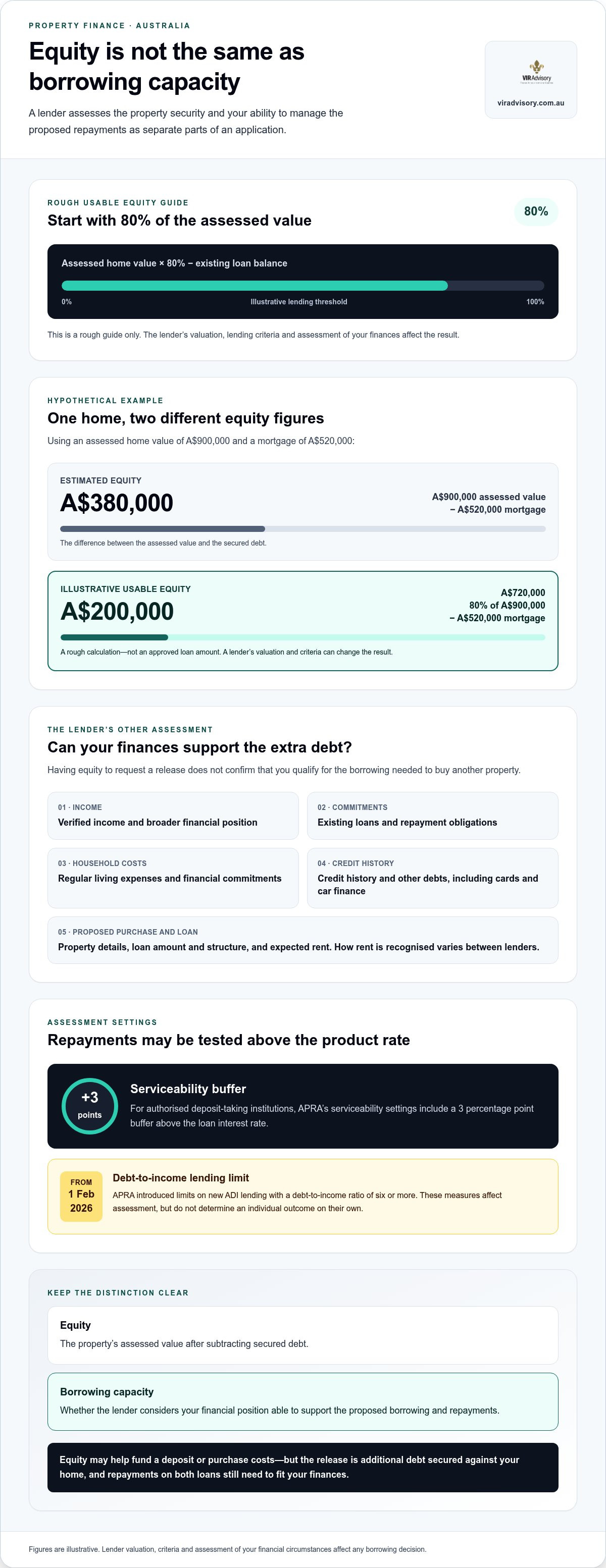
You can often use equity to buy property, provided a lender approves the borrowing and you can meet the repayments. Usable equity is usually less than total equity. As a rough guide, a lender may calculate it by taking 80% of your home’s assessed value and subtracting the existing loan balance. The lender’s valuation and lending criteria affect the result.
Equity alone doesn’t determine whether an investment purchase is affordable. Lenders also assess your income, existing debts, expenses, credit history and proposed loan, including whether repayments remain manageable if rates rise. Releasing equity may help fund a deposit or purchase costs, but it adds debt secured against your home and can put pressure on household cash flow.
This article explains how lenders assess usable equity and borrowing capacity, compares common loan structures, and outlines the risks to consider before applying. It also includes practical steps for preparing your figures and documents before discussing finance options.
Key Takeaways
- You can use equity to buy property, but available equity and lender-approved borrowing capacity are separate assessments.
- A separate loan split can keep investment borrowing distinct, while refinancing may change your existing loan structure. Compare repayment clarity, costs and total debt exposure.
- Before applying, map out purchase costs, repayments, potential vacancy periods and a cash-flow buffer.
- Prepare details of your current loans, income, financial commitments and intended purchase to support a clearer lender assessment.
- A mortgage broker can compare lender criteria and review home loan, refinancing and investment property finance structures.
How using equity to buy property works in Australia
You may be able to use equity in your home to help fund an investment property purchase, but access depends on lender assessment and approval. Equity is the difference between a property’s assessed value and the debt secured against it. Usable equity is the portion a lender may consider available to borrow after applying its valuation, lending criteria and assessment of your financial circumstances.
These figures answer different questions. Equity estimates what you own in the property after secured debt; usable equity concerns how much a lender may allow you to borrow against it. Neither figure confirms that you can afford the additional repayments or qualify for a separate investment loan.
The video below provides another explanation of using home equity to fund a property purchase:
What is the difference between equity and usable equity?
Hypothetical example: Suppose a lender assesses a home at A$900,000 and the mortgage secured against it is A$520,000. The difference is A$380,000 in equity. This is an estimate based on the assessed value, not necessarily the property’s eventual sale price or the amount you can borrow.
Usable equity may be lower because the lender applies its own criteria and considers your existing loan and financial circumstances. Its valuation may also differ from your estimate, changing the calculation. For general background on the concept, see What is Home Equity? Available equity and borrowing capacity are not the same: equity relates to the property’s value after secured debt, while borrowing capacity depends on whether you meet the lender’s assessment for the proposed debt.
Can equity act as a deposit for another property?
Potentially. If approved, funds released against your home may contribute to the deposit or other funding needed for an investment purchase. The equity release is borrowing secured against your existing property. It isn’t a cash gift or a deposit that avoids taking on debt.
The investment property will usually also require its own purchase loan, subject to a separate lender assessment. The equity contribution may reduce how much cash you need to provide yourself, while another loan covers the remaining purchase amount. The structure and amounts depend on lender approval and the transaction.
Allow for more than the purchase price. Budget for applicable buying costs, then check that repayments on both loans fit your finances alongside existing commitments. If rent is lower than expected or the property is vacant, you may need to cover the shortfall from other income. Treating the full equity figure as immediately available can leave a funding gap or put pressure on household cash flow.
How lenders assess equity, borrowing capacity and a second property loan
Having enough equity to request a release doesn’t automatically mean you can borrow enough to buy an investment property. These are separate tests: the lender considers the security available, then assesses whether your finances can support the existing and proposed repayments. It assesses the whole application, not equity alone.
An application can have a strength in one area and a constraint in another. A suitable property valuation may support the requested loan amount, while existing repayments and household expenses limit what the lender considers affordable. Strong income doesn’t remove requirements relating to the property securing the debt.
What information may a lender consider?
The lender may obtain a valuation of your home and review its existing mortgage balance, along with other loans and repayment commitments. It will assess verified income, regular living expenses and the broader financial position of each borrower. The assessment relies on the information and evidence provided, not equity estimates alone.
For the proposed purchase, the lender may consider the property details, loan amount and structure, and expected rental income. How rent is recognised varies between lenders, so don’t assume the full advertised rent will be included in a particular way. Evidence of income, expenses and debts supports the assessment, but does not guarantee approval.
Why borrowing capacity can limit an equity-funded purchase
Serviceability is an assessment of whether income can support repayments after the lender accounts for expenses, debts and its assessment settings. Existing home loan repayments remain relevant, and the proposed investment loan adds another commitment. Credit cards, personal loans, car finance and other regular obligations can also reduce the room available for further borrowing.
For authorised deposit-taking institutions, APRA’s serviceability settings include a 3 percentage point buffer above the loan interest rate. This means repayment capacity is tested at a higher rate than the product rate. APRA also introduced limits from 1 February 2026 on new ADI lending with a debt-to-income ratio of six or more. These measures affect assessment, but don’t determine an individual outcome on their own.
Before selecting a property, test the proposed repayments against your current commitments and budget rather than relying only on expected rent. A different purchase price or loan amount may change the application, but the lender still assesses your complete financial position. To prepare, organise current loan statements, income records, regular expense figures, details of other debts and information about the proposed purchase.
Equity release or refinancing: compare structures before buying
If you use equity to buy property, the way the borrowing is arranged affects how clearly you can monitor balances and repayments. A separate loan split and refinancing are two structures a lender may assess. Neither is automatically preferable: the comparison depends on your existing loan, intended use of funds, lender requirements and proposed purchase.
Look beyond the amount you may be able to release. Consider whether the structure keeps borrowing purposes distinct, how it affects your current loan terms, and whether the combined debt and repayments remain manageable. Every option is subject to lender assessment.
What does a separate loan split change?
A separate split is an additional loan account set up for a defined purpose, such as funding part of an investment purchase. Keeping it apart from your owner-occupied loan can make the balance and repayment activity easier to identify. It doesn’t reduce the amount borrowed or remove the obligation to make repayments.
Keep statements and transaction records showing how the funds are used, and avoid mixing money for different purposes in the same account. A separate split can make the lending easier to track, but it doesn’t determine the tax treatment. Deductibility depends on how funds are used, so seek advice from a qualified tax professional about your circumstances.
When might refinancing be part of the assessment?
Refinancing may be considered alongside an equity release. It replaces or changes existing lending and requires approval and a fresh assessment. This can provide an opportunity to review how current and proposed borrowing are arranged, but a new lender may apply different criteria and terms. The assessment needs to consider your full lending position, not only the amount requested for the investment.
Weigh possible structural flexibility against the trade-offs. Changing lenders or loan arrangements may involve costs, and the replacement loan may have different terms. Depending on the approved structure, repayments or overall debt exposure may also change. Compare the total repayments and conditions across all facilities, rather than focusing only on the funds being released.
To make the comparison concrete, list the purpose of each amount you plan to borrow, the property securing each loan and the repayment arrangement. Then consider the main trade-offs:
- Separate split: can make the balance and borrowing purpose easier to track, but adds debt and repayment commitments.
- Refinancing: allows existing lending to be reviewed as part of the assessment, but may involve costs, changed terms and a fresh application.
Before proceeding, make sure the proposed structure reflects how funds will actually be used and that you can maintain clear records. Organising a loan can improve visibility, but it doesn’t reduce the debt or replace qualified advice about tax treatment.
A practical checklist for using home equity to buy property
Before you use equity to buy property, check the proposed purchase against your borrowing plans and household cash flow. A structured review can expose a shortfall before you commit, particularly if you haven’t allowed for purchase costs, ongoing expenses or a gap in rental income.
What should you prepare before discussing finance?
Gather current figures and records, then work through these steps in order. Use information for the specific property where available, and mark estimates that still need verification.
- Set the purpose and scope. Record whether the property will be an investment or owner-occupied, your indicative purchase range and what you expect the equity funds to cover.
- Map your existing position. List each loan balance, repayment and other regular debt commitment. Add verified income details and household expenses so the proposed borrowing can be considered alongside existing obligations.
- Cost the purchase. Estimate the deposit and applicable purchase costs using current, property-specific information. Identify which funds are expected to come from borrowing and which, if any, will come from savings.
- Forecast ownership cash flow. Include loan repayments and ongoing property expenses. For an investment, estimate rent conservatively and allow for potential vacancy or a change in rental income.
- Set a buffer and test readiness. Decide what cash reserve you need for unexpected costs, then check whether the budget still works if rent is interrupted or expenses rise. Keep the buffer separate from funds allocated to settlement.
Equity purchase readiness framework
Purpose → Current finances → Purchase costs → Ongoing cash flow → Buffer and assessment
At each stage, confirm the figures, identify assumptions and note what needs lender assessment before treating the plan as ready.
How can you reduce avoidable application and cash-flow risks?
A common mistake is treating an estimated equity figure as cash already available. Another is borrowing up to the maximum assessed amount without considering how much room the household budget needs. Keep loan purposes distinct in your records, and avoid combining funds for separate uses in a way that makes transactions difficult to trace.
An online estimate can help with early planning, but it isn’t a lender valuation or approval. Check the repayment position under changed circumstances, such as a vacancy, unexpected ownership expenses or a shift in household income. Use figures relevant to the property and your budget rather than relying on a single optimistic assumption.
If you hold or plan to acquire multiple properties, assess how the proposed borrowing fits the portfolio’s combined commitments and cash flow. Treat the purchase as ready to proceed only when the costs, funding sources, repayments and buffer are clear and the lender has assessed the application.
Get a property equity finance assessment with VIR Advisory
Before making an offer on an investment property, assess the proposed borrowing against your existing loans, finances and purchase plans. A mortgage and finance broker can compare relevant lender criteria and review potential home loan, refinancing and investment property finance structures. The lender makes the final lending decision.
What can a broker help assess?
A broker can review how your current lending and potential equity access fit the proposed purchase, then compare relevant lender requirements against your circumstances. This may include the loan structure, repayment commitments and information needed for an application. Comparing criteria can clarify which options warrant further assessment, but can’t guarantee approval or a particular borrowing amount.
For example, you might want to draw on your home’s equity while keeping the existing loan in place, or consider refinancing as part of the funding arrangement. An assessment can compare how each option affects your overall lending position and what information the lender may require. The suitable structure depends on the purpose of the funds, existing facilities, proposed purchase and lender approval.
VIR Advisory is led by Raina Doshi, who has over 15 years of banking and finance experience. For borrowers considering whether to use equity to buy property, brokerage support can help organise the relevant figures and compare lender criteria. The lender assesses any application under its own requirements.
What to bring to an initial finance discussion
You don’t need to have every detail finalised before discussing finance, but accurate starting information makes the assessment more useful. Gather documents and figures that show your current position, then note what you’re aiming to purchase and how you expect to fund it.
- Current lending: mortgage balances, repayment amounts and details of other loans or credit commitments.
- Income and expenses: verified income information, regular household or business commitments, and recurring costs.
- Purchase plans: intended property use, indicative purchase details and expected rent if it’s an investment.
- Ownership costs: available estimates for purchase costs and ongoing expenses associated with the specific property.
- Questions about structure: whether you’re considering an equity release, separate borrowing or refinancing, and what you want each loan to fund.
Bring estimates as estimates, and identify where figures still need verification. This helps distinguish confirmed costs from assumptions and gives the lender a clearer picture once an application is prepared. If you’re self-employed or have variable income, include records that explain how your income is earned, alongside the information used to verify it. A broker can then assess how the details align with relevant lender criteria and discuss application requirements.
Make your next property finance decision with clarity
Before committing to a purchase, check that the proposed finance still fits if circumstances change. Your plan should account for repayments and ownership costs if rental income is interrupted or household finances shift. This final sense-check can help you decide whether to proceed, adjust the purchase budget or pause while you gather more information.
If you’re considering whether to use equity to buy property, make the finance discussion specific: bring the property details you have, identify what remains uncertain and ask how those points may affect the application. A broker can help assess lender criteria and structure options, but the lender makes the final decision. Treat estimates as preliminary until they have been assessed.
VIR Advisory provides mortgage and finance brokerage across Australia, including home loan, refinancing and property investment finance support. Raina Doshi brings over 15 years of banking and finance experience to discussions about lending options and application requirements.
Frequently Asked Questions
Can I use equity in my home to buy an investment property?
Yes, a lender may approve borrowing against your home to help fund an investment property, but available equity doesn’t guarantee approval. The lender assesses both the property securing the borrowing and whether your finances support the proposed repayments. For example, an applicant with substantial equity may still face a borrowing limit if other loan commitments leave insufficient capacity. Treat online estimates as preliminary, not as a lending decision or confirmed funds.
How do lenders calculate usable equity in Australia?
Lenders assess the property’s value and the debt secured against it, then apply their own lending criteria to determine whether further borrowing may be available. The result can depend on the lender’s valuation, your existing loan arrangements and your overall financial position. Usable equity isn’t money held in a bank account: accessing it generally involves additional borrowing, which must be assessed for affordability and approved by the lender.
Does using equity mean I do not need a deposit?
Not necessarily. An approved equity release may contribute towards deposit funds, but you still need an approved structure for the purchase and enough funding for applicable costs. For instance, the amount released against your home and the loan for the investment property may need to be arranged as separate parts of the overall finance. Don’t assume the lender will fund every cost or that no cash contribution will be needed.
Can I use equity if I already have a home loan?
Yes, an existing home loan doesn’t automatically rule out further borrowing. The lender will consider its balance and repayments alongside the proposed lending and your other commitments. An equity release or refinance may be assessed, but taking on more debt can reduce the room in your household budget and increase your exposure if property values change. Check how the combined repayments fit your finances before making a purchase commitment.
Is it better to refinance or take a separate loan split to access equity?
Neither option is best for every borrower. A separate split can make it easier to track borrowing for a distinct purpose, while refinancing may allow the existing loan structure and terms to be reviewed. Both options are subject to lender assessment and may bring costs or changed conditions. Compare them against your current loan, planned use of funds and recordkeeping needs. For tax treatment, seek advice from a qualified tax professional.
What are the risks of using home equity to buy another property?
Borrowing against your home increases your debt and repayment commitments, and the property may secure obligations under the loan. Cash flow can come under pressure if ownership expenses arise or rental income changes. Before proceeding, consider the combined loan exposure, keep a buffer for unexpected costs and maintain records showing how borrowed funds are used. Neither future property values nor lender approval is guaranteed, so avoid basing affordability on optimistic assumptions.
What documents may I need when applying to use equity?
Lenders may request current information about your identity, income, regular expenses, debts and existing property lending, as well as details of the proposed purchase. A borrower with variable or self-employed income may need records that help explain how that income is earned. Requirements differ between lenders and applicants, so prepare accurate, up-to-date information and be ready to clarify figures. Providing documents supports assessment but doesn’t ensure approval.

Article by
Raina Doshi
Raina Doshi has worked in banking and finance since 2011, including experience with major Australian lenders. She helps homeowners, property investors, business owners and professionals secure and structure lending solutions across home loans, refinancing, commercial finance and business lending.
Areas of expertise include residential lending, investment property finance, debt recycling, commercial property finance, equipment finance, construction finance and strategic debt structuring.
Drawing on extensive banking and finance experience, Raina helps clients navigate lender requirements, improve borrowing outcomes and structure effective finance solutions.
Disclaimer
The information in this article is general in nature and does not take into account your personal objectives, financial situation or needs. Before acting on any information, consider whether it is appropriate to your circumstances and seek professional advice.


